Introduction
Crunchbase’s latest dataset shows that the second quarter of 2026 saw the highest number of billion‑dollar startup exits since the 2021 market peak. Although the exit count still trails the 2021 high, the total value of these deals has surged, driven by SpaceX’s record‑setting IPO and a cluster of sizable acquisitions and IPOs across AI, quantum computing, and hardware.
What Happened
- SpaceX IPO: On May 10th, SpaceX raised $75 billion, achieving a first‑day market cap of $2.1 trillion.
- Cursor Acquisition: SpaceX paid $60 billion for AI coding platform Cursor, the most expensive purchase of a venture‑backed private startup.
- Cerebras Systems IPO: Went public in May, raising $5.55 billion and securing a market cap of $38 billion.
- Quantinuum IPO: Quantum computing firm raised $1.7 billion, reaching a $15.6 billion market cap.
- Other notable exits: Several mid‑tier AI and hardware companies were acquired or went public, each valued above $1 billion.
Key Details
- Exit Count vs. Value: The number of exits is lower than the 2021 peak, but the average deal size is higher.
- Sector Spread: AI, hardware, and quantum computing dominate, reflecting investor appetite for high‑growth tech.
- Liquidity Impact: SpaceX’s IPO created unprecedented liquidity for founder Elon Musk and set a new benchmark for IPO valuations.
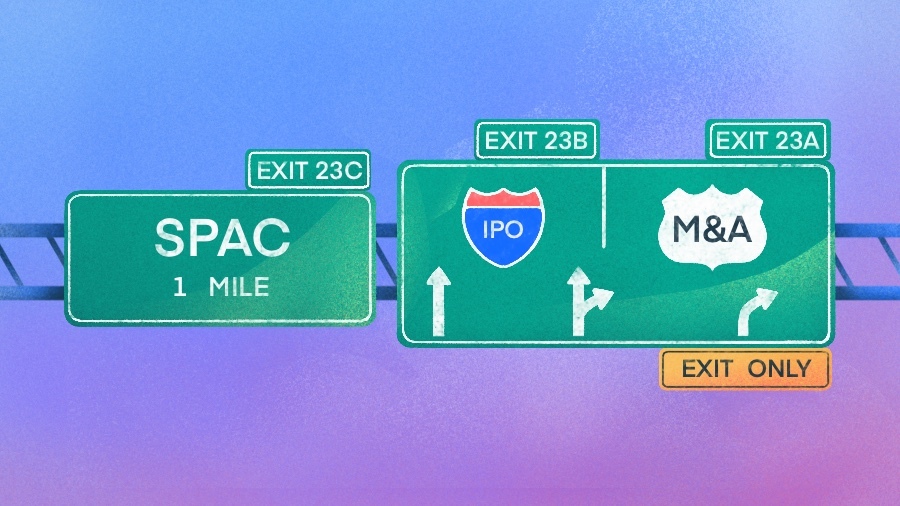
- SPAC vs. IPO: The SPAC boom of 2019‑2024 is unlikely to be matched; Q2 2026 still relies heavily on traditional IPOs.
Technical Analysis
- Valuation Multiples: SpaceX’s $75 billion IPO implied a valuation multiple of ~6× revenue, a significant lift from previous years.
- Revenue Growth: SpaceX’s revenue trajectory, driven by satellite launches and Starlink, supports the high multiple.
- Market Sentiment: Positive sentiment around AI and hardware startups has kept discount rates low, inflating valuations.
- Capital Allocation: Venture capital firms have shifted from early‑stage to late‑stage exits, focusing on companies with clear path to liquidity.
Industry Impact
- Competitive Landscape: Companies like Cerebras and Quantinuum now compete for talent and funding against larger incumbents.
- Investment Patterns: The focus on large exits may deter smaller startups from pursuing aggressive growth strategies.
- Regulatory Scrutiny: High‑profile exits attract regulatory attention, especially concerning data privacy and AI ethics.
Future Implications
- Exit Strategy Evolution: Founders may prioritize strategic acquisitions over IPOs to secure higher valuations.
- Funding Ecosystem: VC funds might allocate more capital to later‑stage rounds, potentially reducing early‑stage funding.
- Technology Adoption: AI and quantum companies now have the capital to accelerate product development and market penetration.
Why It Matters
For developers, the surge in large exits signals a shift in the talent market—companies with deep pockets can offer competitive salaries, equity packages, and resources for cutting‑edge research. Businesses benefit from increased access to advanced AI and quantum solutions, as funding inflows accelerate product development and market readiness. The AI industry, in turn, gains a stronger foundation of capital, enabling faster innovation cycles and the potential for more disruptive technologies.
Expert Analysis
The Q2 2026 exit landscape underscores a maturation of the AI and tech ecosystem. While the exit count lags the 2021 peak, the higher average deal size suggests a consolidation of value. Companies that can demonstrate clear revenue streams and scalability are now more likely to attract high‑value exits. This trend presents opportunities for developers to engage with well‑funded teams, but also risks of market saturation and inflated valuations that could lead to corrections.
Market Impact
- AI Market: The influx of capital into AI startups fuels R&D, potentially accelerating breakthroughs in natural language processing, computer vision, and autonomous systems.
- Competitors: Established tech giants may face increased competition from newly funded AI firms, prompting strategic acquisitions or partnerships.
- Investment Landscape: Venture capital focus shifts toward later‑stage, high‑valuation exits, potentially tightening early‑stage funding.
Developer Impact
Developers can expect:
- Higher Compensation: Equities and salaries may rise in high‑valuation companies.
- Access to Resources: Larger budgets enable better infrastructure, tooling, and experimentation.
- Talent Competition: Increased competition for skilled engineers, leading to a talent war.
Future Prediction
- 30‑Day: Expect market volatility as investors digest the high valuations of SpaceX and Cerebras.
- 90‑Day: Potential for follow‑on offerings from SpaceX and other high‑valuation firms; early‑stage funding may tighten.
- 180‑Day: Possible market correction if valuations remain unsustainable; early‑stage startups may pivot to alternative funding models.
FAQs
- Q1? What is the significance of SpaceX’s $75B IPO?
- A1? It sets a new benchmark for IPO valuations, creating unprecedented liquidity and influencing future exit strategies.
- Q2? How does this affect early‑stage startups?
- A2? Early‑stage funding may become more competitive; founders may need to focus on rapid growth to attract later‑stage investors.
- Q3? Will the SPAC boom return?
- A3? It is unlikely to match the 2021 peak; traditional IPOs remain the dominant exit route.