OpenAI Pushes AI Data Center Expansion Amid Tech Political Silence
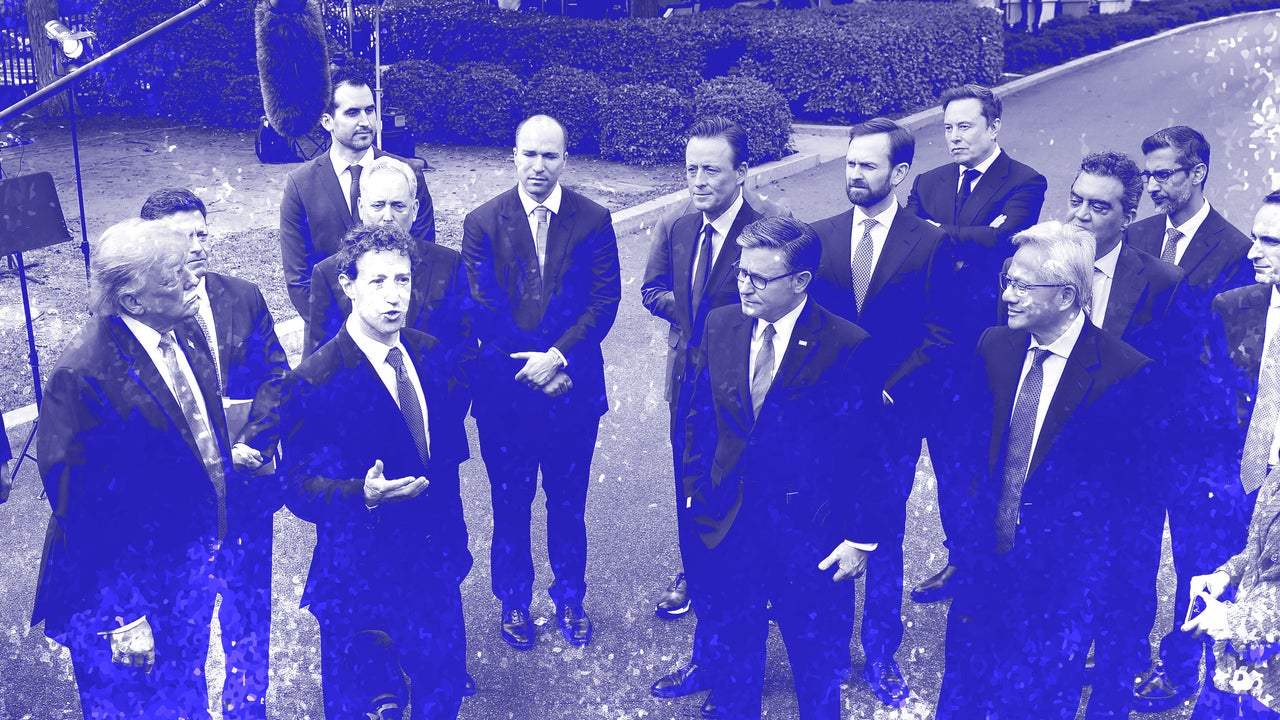
Following the 2026 midterm elections, prominent Silicon Valley donors remain quiet while OpenAI reaffirms its aggressive AI data center expansion. Despite voters rejecting 40 out of 41 local data center initiatives, OpenAI CFO Sarah Friar emphasized continued capital raising and infrastructure investment to meet enterprise demand.
- OpenAI CFO Sarah Friar confirms continued capital raising for AI data centers despite political midterms.
- Voters rejected local data center construction measures in 40 out of 41 instances during the midterms.
- Elon Musk spent $474 million on political campaigns, emerging as the top donor with mixed electoral results.
- Silicon Valley's major conservative tech donors have remained quiet following Democratic midterm wins.
- OpenAI's infrastructure strategy relies on expanding hyperscaler partnerships to meet sustained model demand.
Following the 2026 midterm election results, Silicon Valley's prominent political donors remain largely silent while OpenAI signals unflagging infrastructure expansion. Despite voters rejecting 40 out of 41 local data center initiatives, OpenAI CFO Sarah Friar confirmed the company will continue securing capital and building infrastructure to meet surging global AI demand.
How Are Silicon Valley Tech Allies Reacting to the Midterm Election Results?
In the wake of the 2026 midterm elections, which saw sweeping Democratic victories across key battleground states, major Silicon Valley political figures have adopted a noticeably reserved stance. Elon Musk, who emerged as the largest individual donor of the cycle by spending approximately $474 million through his political action committees, remains one of the few high-profile tech leaders to comment publicly.
After investing nearly half of his nationwide political funding into losing Republican campaigns in Texas, Musk acknowledged the outcome on X (formerly Twitter) with characteristic sarcasm before deleting earlier posts urging voters to support conservative candidates. Musk subsequently shifted public focus toward orbital infrastructure, posting that space-based data centers were looking increasingly appealing.
Meanwhile, the majority of tech executives who backed conservative candidates or aligned with the previous administration's deregulation agenda have refrained from issuing official statements. Industry analysts note that this silence reflects a broader recalibration among technology firms evaluating how shifting legislative majorities might impact energy policy, trade restrictions, and tech sector oversight over the coming legislative term.
Why Is OpenAI Continuing AI Data Center Investment Despite Voter Pushback?
While political debate continues in Washington and state capitals, artificial intelligence leaders are prioritizing physical hardware and compute capacity. Speaking at an industry event following the election, OpenAI Chief Financial Officer Sarah Friar highlighted that operational priorities remain fixed on meeting sustained enterprise demand for advanced model capabilities.
Friar addressed recent local ballot measures where voters in 40 out of 41 municipalities rejected proposed data center developments due to concerns over energy consumption, water usage, and local tax incentives. Despite these public pushback signals, OpenAI maintains that expanding compute footprint remains vital for non-stop model training and deployment.
"When I think about the midterms, I need to keep thinking about how do we keep investing to meet that customer demand," Friar stated. She emphasized that OpenAI’s strategy relies heavily on deep, early-stage partnerships with major hyperscalers—such as Microsoft, Oracle, and other cloud infrastructure providers—alongside ongoing private capital deployment to fund massive hardware buildouts.
What Does Local and Political Resistance Mean for AI Infrastructure Funding?
The contrast between local voter opposition and tech sector capital deployment underlines a growing bottleneck in the AI supply chain. Data centers require vast amounts of power grid capacity, high-density cooling systems, and extensive real estate—resources that are increasingly controversial in municipal jurisdictions.
Key structural factors shaping AI infrastructure include:
- Energy Grid Demands: Modern AI training clusters consume hundreds of megawatts, pressing utility providers to balance renewable energy mandates with continuous load requirements.
- Hyperscaler Co-Investment: AI frontier labs are shifting capital expenditure burdens by co-developing sites with established cloud providers to mitigate balance-sheet risks.
- Alternative Site Selection: Tech companies are exploring international jurisdictions, rural industrial zones, and energy-adjacent sites to bypass municipal zoning delays.
- Private Equity Financing: Institutional investors and infrastructure funds continue to pour capital into compute assets, treating AI hardware capacity as a foundational utility.
Despite localized political friction, capital commitment to generative AI compute shows no signs of slowing down, forcing enterprises to prepare for changing cloud pricing structures and service availability.
Frequently Asked Questions About AI Infrastructure and Policy Shifts
How will midterm election outcomes affect federal AI regulations?
Federal AI regulation will likely focus on algorithmic accountability, privacy standards, and supply chain security. While major legislation takes time to pass, regulatory agencies are expected to maintain scrutinizing eyes on data usage, anti-competitive cloud practices, and energy consumption standards for enterprise data centers.
Why are local communities rejecting data center ballot measures?
Local opposition primarily stems from concerns over municipal power grid strain, heightened water usage for evaporative cooling, potential noise pollution, and debates over whether localized tax abatements provide sufficient long-term community benefits relative to resource consumption.
How can a business adapt its strategy to navigate AI infrastructure costs and regulatory changes?
A business can adapt by engaging in business strategy consulting to evaluate its software architecture, optimize model compute utilization, and build flexible private or hybrid workflows that prevent total lock-in to single infrastructure providers.
What this means for your business
The post-election landscape demonstrates that while political dynamics and local zoning challenges evolve, the core commercial demand for artificial intelligence remains relentless. As OpenAI doubles down on infrastructure and capital raising despite regulatory and community hurdles, enterprise leaders must insulate their technology roadmaps from external volatility. Building resilient digital infrastructure requires a clear business strategy consulting framework that balances risk, compute availability, and long-term organizational goals.
For organizations looking to deploy next-generation capabilities, relying purely on hyperscaler expansion is not enough. Businesses must focus on building efficient, targeted application layers through custom AI tools development that maximize compute efficiency while driving direct operational ROI. Furthermore, implementing scalable AI automation across core business workflows enables enterprises to remain agile regardless of macro-level political shifts or cloud infrastructure bottlenecks. ThinkSuite partners with executive teams to translate complex AI industry developments into actionable software, automated processes, and robust digital systems designed for sustainable growth.
Why it matters
This development underscores the growing divergence between political voter sentiment and tech industry capital deployment. While local communities voice resistance to physical data center expansion due to energy and water demands, frontier AI companies like OpenAI treat compute capacity as an urgent, non-negotiable imperative. For businesses relying on cloud infrastructure and artificial intelligence applications, understanding these dynamics is vital. Capital costs, energy grid access, and municipal policy will directly influence the pricing, availability, and latency of commercial AI models in the coming years.
Market impact
The sustained capital push by OpenAI and its hyperscaler partners reassures investors that fundamental demand for compute remains strong. However, local pushback may increase construction lead times and capital expenditure requirements for data center operators, potentially keeping compute costs high. Specialized infrastructure funds and energy providers stand to gain leverage as AI labs compete aggressively for grid connections.
Developer impact
Engineers and enterprise development teams should anticipate higher emphasis on model efficiency, quantization, and edge deployment to mitigate potential cloud compute bottlenecks. As raw compute infrastructure faces physical and political constraints, software optimization and efficient prompt engineering will become critical operational priorities.
What comes next
In the next 30 days, expect hyperscalers and AI labs to revise their site-selection criteria toward energy-surplus regions. Within 90 days, legislative committees will likely host hearings on data center grid impact. Over the next 180 days, enterprise interest in smaller, fine-tuned open-source models will rise as businesses seek to reduce reliance on massive centralized data centers.
The reaction—and relative silence—from Silicon Valley following the 2026 midterms signals a shift in political risk management. High-profile political expenditures by tech leaders have yielded mixed operational benefits, leading major AI platforms to focus strictly on enterprise fundamentals: compute capacity, hyperscaler alliances, and continuous fundraising. OpenAI's insistence on pressing forward with data center buildouts despite 40 out of 41 local ballot rejections illustrates that raw compute capacity remains the ultimate competitive moat in generative AI. However, persistent municipal resistance will eventually force AI companies to rethink site selection, explore higher-efficiency model architectures, or invest heavily in next-generation power solutions like small modular nuclear reactors or orbital infrastructure.
ThinkSuite AI analysis
Frequently asked questions
How will midterm election outcomes affect federal AI regulations?
Federal AI regulation will likely focus on algorithmic accountability, privacy standards, and supply chain security. While major legislation takes time to pass, regulatory agencies are expected to maintain scrutinizing eyes on data usage, anti-competitive cloud practices, and energy consumption standards for enterprise data centers.
Why are local communities rejecting data center ballot measures?
Local opposition primarily stems from concerns over municipal power grid strain, heightened water usage for evaporative cooling, potential noise pollution, and debates over whether localized tax abatements provide sufficient long-term community benefits relative to resource consumption.
How can a business adapt its strategy to navigate AI infrastructure costs and regulatory changes?
A business can adapt by engaging in business strategy consulting to evaluate its software architecture, optimize model compute utilization, and build flexible private or hybrid workflows that prevent total lock-in to single infrastructure providers.
Go deeper
PoliGuard AI
Real‑time AI‑driven misinformation detection and election integrity monitoring for watchdogs and media.
All Opportunities (6)
PoliGuard AI
medium competitionReal‑time AI‑driven misinformation detection and election integrity monitoring for watchdogs and media.
VoxVote
high competitionAI‑powered micro‑targeting platform that crafts personalized voter outreach content.
LaserShield
low competitionSatellite imagery analysis system that detects unauthorized space laser activity using AI.
LobbyLink
medium competitionPredictive analytics platform connecting lobbyists to policymakers with AI‑generated insights.
CampaignVoice
high competitionAI content generator for political speeches, ads, and social media posts.
Elections 4.0
low competitionBlockchain‑powered secure online voting platform with AI fraud detection.
Also available in:हिंदीEspañolFrançais
Sources
Fast Company Tech ↗More on OpenAI

Challenging AI Monopoly: Lessons from Silicon Valley's Infrastructure Race
As cloud giants project up to $4 trillion in AI infrastructure spend by 2030, Nvidia's chip dominance faces emerging challenges. Tensordyne co-founder R K Anand draws on dot-com era lessons from Cisco and Juniper to explain how first-principles innovation can disrupt AI hardware monopolies.

OpenAI Signs Strategic UAE Deal With ADNOC and G42 in Abu Dhabi
OpenAI CEO Sam Altman visited the United Arab Emirates as Abu Dhabi's ADNOC and AI group G42 signed strategic partnership deals. The initiative aims to accelerate enterprise artificial intelligence adoption, cloud infrastructure expansion, and energy sector optimization across the region.

OpenAI Python SDK v3.42.1 Released: Realtime & WebSocket Fixes
OpenAI has officially released version 3.42.1 of its Python SDK (openai-python), introducing critical fixes for WebSocket connection handling in the Realtime API. The patch resolves authentication profile validation issues and adds SDK-owned policy helpers for stable streaming interactions.