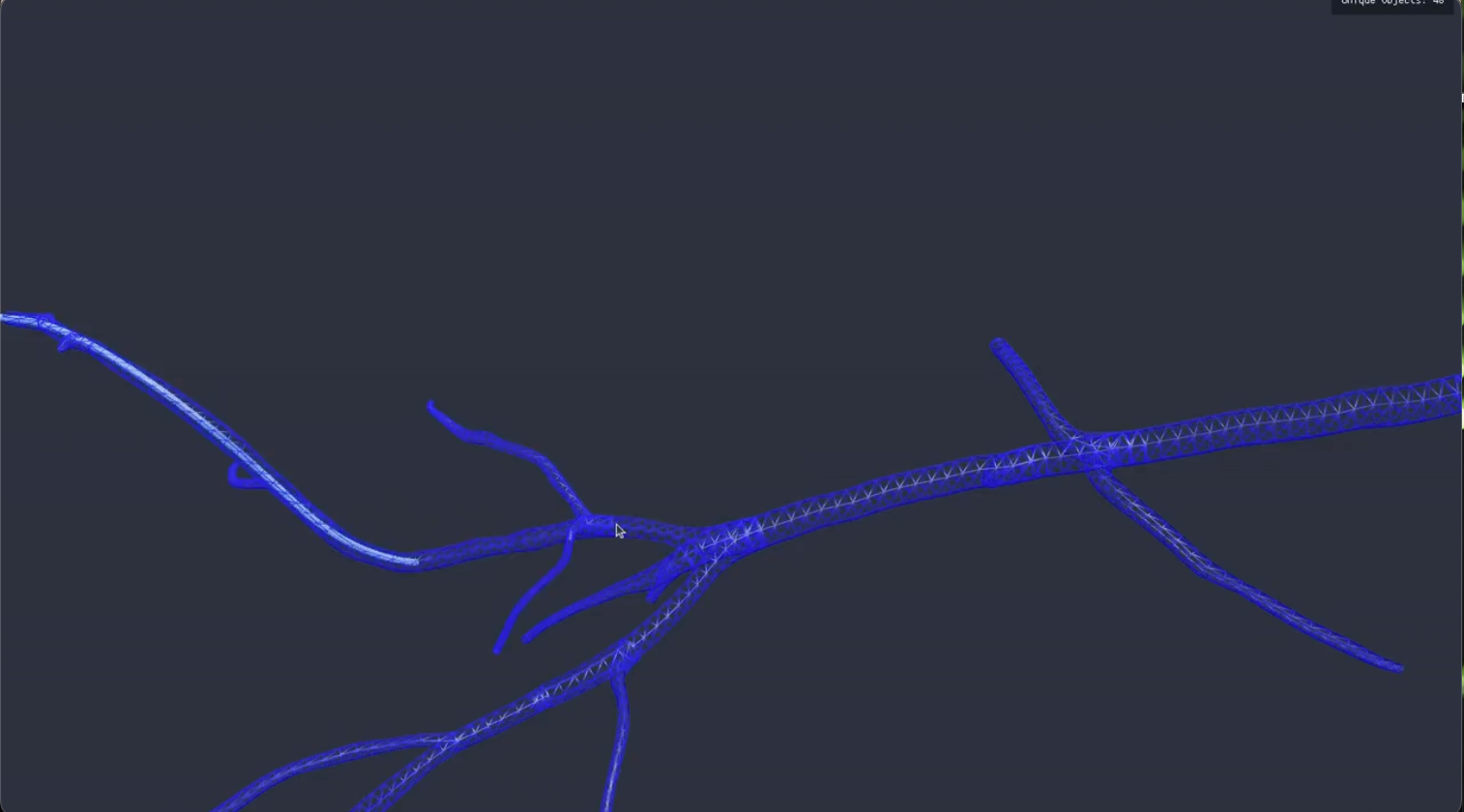
Revolutionizing Healthcare Robotics: NVIDIA Open-Sources GPU-Accelerated Medical Physics Simulation
The promise of intelligent healthcare robots to transform surgery, diagnostics, and patient care is immense. Yet, a significant hurdle has long stymied progress: the sheer difficulty of obtaining vast, varied, and realistic data needed to train and validate these sophisticated machines. Medical robots must learn to navigate the intricacies of human anatomy, account for instrument deformation, understand tissue interaction, and respond to unpredictable scenarios – all before ever touching a patient. Today, NVIDIA has taken a monumental step towards overcoming this challenge, announcing the open-sourcing of its first GPU-accelerated Medical Physics Simulation framework.
This strategic move, integrated within the broader NVIDIA Isaac for Healthcare platform, is poised to democratize access to advanced simulation capabilities, empowering developers to accelerate innovation and bring safer, more effective healthcare robotics to market faster than ever before.
What Happened: A Virtual Sandbox for Medical AI
NVIDIA officially announced the open-sourcing of its Medical Physics Simulation framework. This new capability is specifically designed to tackle the critical bottleneck in healthcare robotics development: the arduous and often impossible task of gathering sufficient real-world data for training and testing. Traditional methods struggle with the variability of human anatomy, the complex physical interactions between instruments and tissue, the noise and incompleteness of medical imaging, and the scarcity of crucial "edge cases" that are vital for robust robot performance.
By open-sourcing this GPU-accelerated simulation framework, NVIDIA provides a powerful tool that allows medical robotics developers to:
- Model anatomy-device interaction with high fidelity.
- Generate hard-to-capture scenarios that are rare or dangerous in real-world settings.
- Test robot policies in silico (within a computer simulation) before resource-intensive hardware testing.
- Train and evaluate robot behaviors in a safe, controlled, and infinitely repeatable virtual environment.
This framework marks a significant shift, enabling teams to create reusable simulation environments rather than continually rebuilding custom scenes for every new workflow, promising substantial time and cost savings.
Key Details: Transparency, Acceleration, and Integration
The NVIDIA Medical Physics Simulation framework is not just another simulation tool; its design and open-source nature embed several critical advantages:
- GPU-Accelerated Performance: Leveraging NVIDIA's powerful GPUs, the framework can handle complex physical computations at speeds necessary for real-time simulation and massive data generation. This acceleration is crucial for simulating soft tissue dynamics, fluid interactions, and instrument mechanics with the fidelity required for medical applications.
- Open Source for Transparency and Adaptability: The decision to make the framework open source is particularly impactful in healthcare. Transparency into data, models, and weights is paramount for regulatory review, enabling developers to inspect the underlying logic, adapt it to specific devices and workflows, reproduce results, evaluate performance across diverse anatomies and scenarios, and identify limitations. This fosters trust and accelerates the path to regulatory approval.
- Seamless Integration with NVIDIA Stack: The framework is designed to work seamlessly with the broader NVIDIA ecosystem, including NVIDIA Isaac for Healthcare, which provides a comprehensive platform for robotics development. This integration ensures that developers can leverage existing tools and workflows, simplifying the development process.
- Synthetic Data Generation: The ability to generate vast amounts of high-quality synthetic data is a game-changer. This data can augment real-world datasets, helping to overcome data scarcity issues and improve the robustness and generalization capabilities of AI models for medical robots.
- Virtual Training Ground for Physical AI: The framework acts as a critical virtual training ground, allowing robots to gain "experience" in a controlled environment. This is essential for training robots to operate reliably even when conditions change, anatomy varies, or unexpected events occur.
Technical Analysis: Beyond Simple Simulation
At its core, NVIDIA's Medical Physics Simulation framework represents a sophisticated fusion of computational physics, sensor simulation, and advanced robot learning techniques. Unlike simpler simulations, this framework is engineered to model the nuanced and often non-linear interactions inherent in medical procedures.
Physics Engine: The GPU acceleration is fundamental, allowing for rapid and accurate computation of complex physical phenomena. This includes:
- Soft Tissue Deformation: Simulating how organs and tissues deform under pressure, tension, and cutting, which is critical for surgical planning and robot control.
- Fluid Dynamics: Modeling blood flow, irrigation, and suction, essential for understanding their impact on visibility and surgical outcomes.
- Instrument Mechanics: Accurately representing how catheters bend, needles penetrate, and surgical tools interact with anatomical structures.
- Contact Dynamics: Realistic collision detection and response between instruments, tissues, and other objects within the surgical field.
Sensor Simulation: To train intelligent robots, the simulation must also accurately mimic the data streams a real robot would receive. This includes:
- Vision Systems: Simulating endoscopic cameras, external cameras, and even X-ray or ultrasound images, complete with realistic noise, occlusions, and lighting variations.
- Force and Torque Sensors: Providing feedback on haptic interactions, crucial for delicate surgical tasks.
- Proprioception: Simulating the robot's own joint positions and velocities.
Robot Learning Integration: The framework acts as a high-fidelity environment for reinforcement learning (RL) and other AI training paradigms. By exposing robot policies to millions of simulated scenarios, including rare edge cases, developers can train highly robust and adaptable AI agents. The synthetic data generated, complete with ground truth labels, can significantly enhance supervised learning models, addressing data annotation challenges that plague real-world medical datasets. The open-source nature also facilitates integration with various robot operating systems (ROS) and AI development platforms, further extending its utility.
Industry Impact: Accelerating Innovation, Enhancing Safety
The impact of NVIDIA's open-source Medical Physics Simulation framework on the healthcare and robotics industries will be profound:
- Accelerated R&D Cycles: Medical device manufacturers and robotics companies can drastically cut down development time by moving much of their testing and validation in silico. This means faster iteration, quicker identification of design flaws, and reduced reliance on costly physical prototypes and animal or cadaveric testing.
- Enhanced Patient Safety: By training robots on an exhaustive range of scenarios, including critical edge cases, the framework will lead to the deployment of more robust and reliable medical robots, ultimately improving patient safety and outcomes during procedures.
- Democratization of Advanced Robotics: Making such a powerful framework open source lowers the barrier to entry for smaller startups, academic researchers, and individual developers. This fosters a more diverse and innovative ecosystem in healthcare robotics, potentially leading to breakthroughs from unexpected corners.
- Standardization and Collaboration: An open-source, GPU-accelerated foundation can encourage standardization in simulation environments, facilitating collaboration across institutions and accelerating the collective progress of the field.
- Regulatory Compliance Support: The transparency inherent in open-source solutions provides a clearer pathway for satisfying stringent regulatory requirements, as developers can provide detailed evidence of a robot's training and testing environments.
Future Implications: Towards Autonomous and Personalized Healthcare
This open-source framework is a foundational piece for the future of healthcare. In the short term, it will significantly boost the capabilities of current surgical robots, enabling them to perform more complex tasks with greater precision and autonomy. We can expect to see an uptick in FDA approvals for AI-powered medical devices, bolstered by comprehensive simulation-based evidence.
Looking further ahead, the implications are even more transformative. Highly realistic and adaptable simulations pave the way for true autonomous medical robots capable of performing intricate procedures with minimal human intervention. This also unlocks possibilities for personalized medicine, where simulations can be tailored to an individual patient's unique anatomy, allowing for pre-operative planning and robot training specific to their case. The framework could also support the development of digital twins of patients, enabling predictive modeling of surgical outcomes and personalized treatment strategies. Furthermore, it will be instrumental in developing advanced training modules for medical professionals, allowing them to practice complex procedures in a risk-free virtual environment, enhancing skill acquisition and reducing learning curves.
NVIDIA's commitment to open source in this critical domain underscores a vision where AI and robotics seamlessly integrate into healthcare, not just as tools, but as integral partners in improving human health and well-being.