Sam Altman Attributes AI Revolution Success to Nvidia CEO Jensen Huang

In a recent Reuters interview, OpenAI CEO Sam Altman recognized Nvidia CEO Jensen Huang as pivotal to the generative AI revolution. Altman emphasized that modern AI scaling would be virtually unthinkable without Nvidia's hardware infrastructure.
- Sam Altman stated the AI revolution is hard to imagine without Jensen Huang.
- Nvidia controls 80-90% of the market for advanced AI training GPUs.
- Hardware and compute access remain the primary bottlenecks for AI scaling.
- Big Tech hyperscalers are developing in-house chips to reduce Nvidia reliance.
- Enterprise AI adoption requires compute-efficient model design strategies.
OpenAI CEO Sam Altman highlighted the indispensable role of Nvidia CEO Jensen Huang in enabling the generative AI revolution. Speaking on compute scaling and hardware dependency, Altman noted that modern breakthrough models like GPT-4 could not exist without Nvidia's GPU infrastructure, underscoring the tech industry's critical hardware reliance.
Why Did Sam Altman Praise Jensen Huang and Nvidia?
During a recent media interaction reported by Reuters, Sam Altman acknowledged that the rapid acceleration of artificial intelligence over the past three years owes its existence directly to Jensen Huang's long-term vision for accelerated computing. Nvidia's graphics processing units (GPUs), particularly the A100, H100, and upcoming Blackwell architectures, have become the fundamental building blocks for training and deploying large language models (LLMs).
Altman noted that while algorithmic improvements and Transformer architectures provided the mathematical foundation, Nvidia provided the raw compute necessary to turn theoretical research into production-grade systems. Without the parallel processing power popularized by CUDA and Nvidia hardware, scaling models to hundreds of billions of parameters would have been economically and technically unfeasible.
How Dependent Is the AI Industry on Hardware Compute?
The comments reflect a deeper truth within the tech ecosystem: hardware remains the ultimate bottleneck for artificial intelligence advancement. As frontier laboratories like OpenAI, Anthropic, and Google DeepMind race toward artificial general intelligence (AGI), their timelines are dictated primarily by GPU availability, energy infrastructure, and data center capacity.
- Compute Scalability: Model capabilities continue to scale with compute power, making chip architecture a strategic national and corporate asset.
- Market Concentration: Nvidia currently controls an estimated 80% to 90% of the AI chip market, creating immense leverage over tech giants and startups alike.
- Supply Chain Pressures: Lead times for high-end AI servers remain extended, forcing companies to secure multi-billion-dollar compute commitments years in advance.
What Are the Market Risks of Compute Centralization?
While Jensen Huang's vision enabled the current AI boom, complete dependence on a single hardware vendor introduces significant supply chain and strategic risks. Geopolitical tensions, semiconductor manufacturing constraints at TSMC, and trade restrictions have highlighted the fragility of the global AI supply chain.
In response, major tech firms are attempting to diversify. Hyperscalers like Microsoft, Amazon, and Google are designing custom silicon (such as Maia, Inferentia, and TPU v5p) to lower reliance on Nvidia. However, software lock-in via Nvidia's CUDA platform makes shifting enterprise workloads away from Nvidia GPUs extremely difficult in the near term.
What this means for your business
As hardware dependence shapes the trajectory of AI, organizations cannot afford to wait for infrastructure bottlenecks to clear before executing their digital roadmap. At ThinkSuite, we help enterprise leaders navigate these market dynamics through clear business strategy consulting and tailored technology integration. Developing a resilient AI strategy allows organizations to optimize model selection, balance compute efficiency, and mitigate single-vendor exposure.
Furthermore, companies looking to deploy high-performing applications without excessive infrastructure overhead turn to our custom AI tools development team. As a dedicated AI development company, ThinkSuite designs lightweight, domain-optimized models and efficient LLM architectures that maximize performance while minimizing raw compute demands. Through rigorous market research, we analyze emerging hardware trends to ensure your business invests in sustainable, future-proof AI solutions.
Why it matters
Sam Altman's candid remarks underscore how profoundly the software revolution relies on hardware innovation. For business leaders and technical architects, this realization shifts the focus from purely selecting models to optimizing compute efficiency, software architecture, and infrastructure resilience. As GPU costs and availability continue to fluctuate, enterprises must plan their digital transformation around hardware constraints. Companies that rely blindly on brute-force model scaling risk severe budget overruns and operational disruptions if supply chains tighten further. Ultimately, the relationship between OpenAI and Nvidia demonstrates that sustainable AI value creation requires deep integration between software algorithms, specialized silicon, and practical enterprise deployment strategies.
Market impact
Nvidia's market cap and position as the backbone of AI remain reinforced by statements from top AI founders like Sam Altman. Investor confidence in Nvidia's long-term moat stays high due to the CUDA software ecosystem, despite rising competition from AMD, Intel, and custom cloud silicon. Simultaneously, venture capital and enterprise spend are increasingly shifting toward software efficiency solutions, edge computing, and smaller, domain-specific models that require significantly less hardware investment to operate at scale.
Developer impact
For developers and software engineers, this news emphasizes the importance of hardware-aware software engineering. Relying solely on massive cloud API calls is becoming cost-prohibitive for many production use cases. Developers must focus on techniques such as model quantization, knowledge distillation, fine-tuning smaller open-source models, and leveraging efficient orchestration frameworks to build scalable applications that do not depend on unconstrained compute access.
What comes next
30 Days: Continued high demand and tight allocation for Nvidia's latest server chips as labs scale training runs. 90 Days: Increased enterprise adoption of smaller, distilled language models designed to lower compute overhead. 180 Days: Broader deployment of custom hyperscaler silicon and alternative chip architectures competing on inference cost efficiency.
Sam Altman's praise for Jensen Huang is both a gracious acknowledgment of an industry titan and a tactical statement regarding OpenAI's operational realities. OpenAI's aggressive scaling laws demand hundreds of thousands of state-of-the-art GPUs. By publicly reinforcing Huang's central role, Altman cements the strategic partnership between the leading AI laboratory and the dominant silicon provider. However, this mutual reliance highlights a strategic vulnerability across the tech landscape. The entire generative AI sector is currently built upon a narrow silicon bridge. Should hardware manufacturing face disruptions or economic friction, software innovation could stall. Consequently, the next frontier of AI strategy will focus heavily on compute efficiency—extracting higher reasoning capability from smaller parameter counts, distilled models, and optimized inference engines.
ThinkSuite AI analysis
Frequently asked questions
Why did Sam Altman praise Jensen Huang and Nvidia?
Sam Altman praised Jensen Huang because Nvidia's GPU hardware and CUDA software provided the crucial computational power required to turn theoretical generative AI research into functional, enterprise-scale models like GPT-4.
How does GPU availability impact enterprise AI adoption?
GPU availability dictates how quickly AI models can be trained and run at scale. Limited hardware availability increases cloud compute costs and delays deployment for companies relying on compute-heavy LLM infrastructures.
How can a business apply this news to optimize its AI implementation?
Businesses can apply this news by auditing their compute usage and shifting toward cost-efficient, domain-specific models rather than over-relying on massive raw compute. By engaging ThinkSuite for custom AI tools development and business strategy consulting, companies can design lightweight AI workflows and strategic tech roadmaps that minimize hardware dependency and keep operational costs manageable.
Go deeper
All Opportunities (6)
EdgeAI GPU-as-a-Service
medium competitionProvides on-demand GPU compute for edge devices and small AI startups via a cloud API, enabling real-time inference without local hardware.
DataCenterCoolAI
low competitionAI‑driven predictive cooling platform that optimizes fan speeds, airflow, and HVAC settings for GPU racks, reducing energy costs and extending hardware life.
GPUBenchAI
medium competitionGenerates AI‑enhanced benchmark reports and procurement recommendations for GPUs, helping teams select the best hardware for their workloads.
CoDesignAI
high competitionCloud platform that uses generative AI to co‑design hardware and software stacks, optimizing silicon for specific AI workloads.
SecureGPUShare
medium competitionMulti‑tenant GPU sharing service that uses AI to enforce security policies, ensuring isolated workloads for research institutions.
ChipAccelAI
high competitionGenerative AI accelerator that proposes silicon architecture optimizations for AI workloads, speeding up chip design cycles.
Also available in:हिंदीEspañol
Sources
Google News - Sam Altman ↗More in Industry News
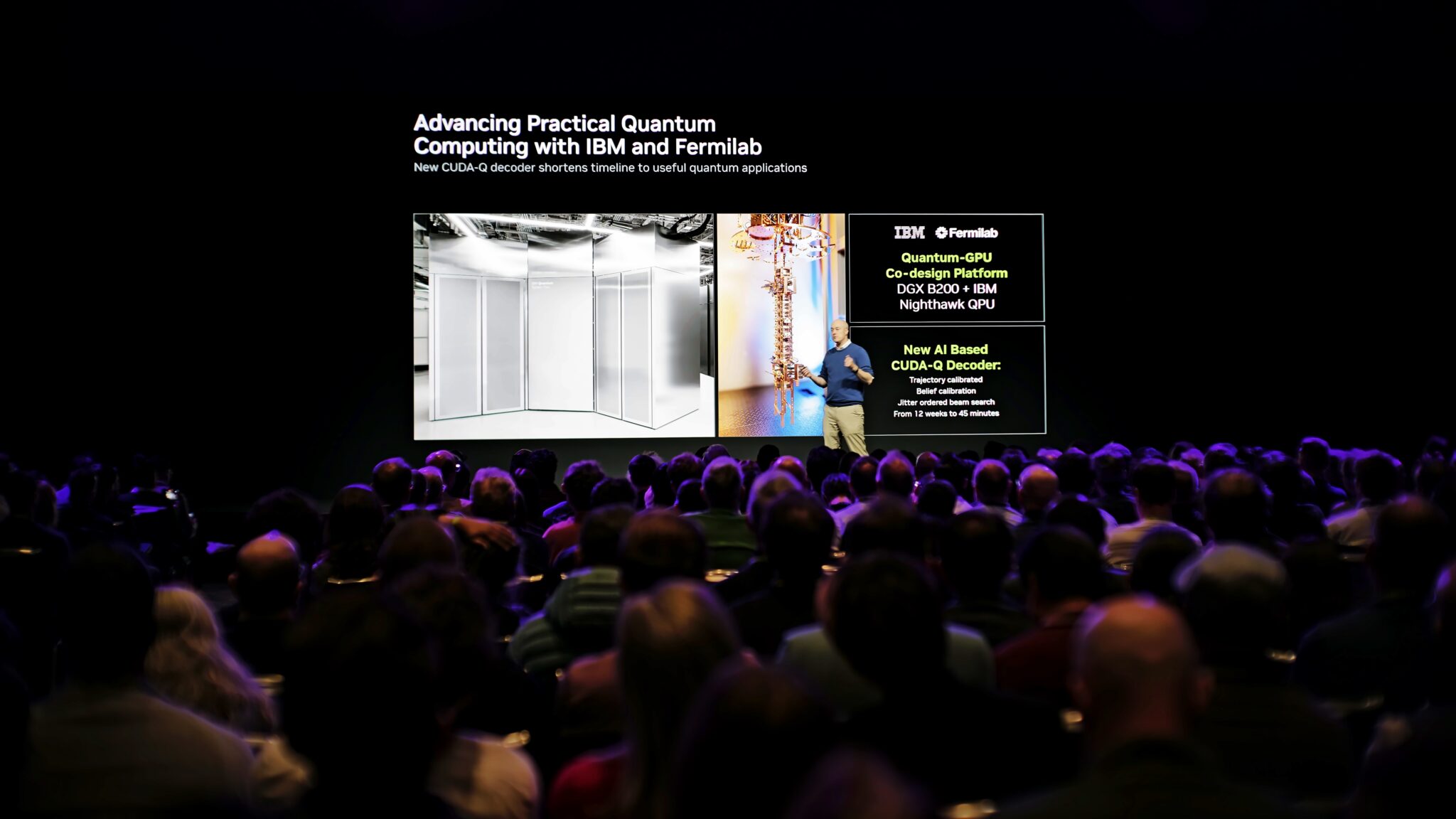
NVIDIA SC26 Keynote: Nemotron for Science and AI Agents Unveiled
NVIDIA vice president Ian Buck opened SC26 in Chicago by introducing Nemotron for Science, the Rubin HPC GPU, and autonomous AI agents designed to plan experiments, repair setups, and run complex simulations on enterprise hardware.
Sam Altman on Nvidia: Why AI Industry Will Survive Post-Jensen Huang
OpenAI CEO Sam Altman acknowledged Jensen Huang's essential role in driving the AI explosion, but stated the broader ecosystem is now strong enough to endure leadership changes. The statement highlights a growing shift toward hardware diversification and enterprise AI resilience.

NVIDIA Leadership Rumors and Deep Tech Benchmarks: Key Takeaways
Recent reports highlight potential executive leadership shifts at NVIDIA as Jensen Huang considers a CEO return amidst regulatory scrutiny. Simultaneously, deep-tech research evaluates the timeline for transformative innovations in hardware, governance, and AI.