
OpenAI's latest study explores the necessity of executable world models, simplification, and verification in coding agents, revealing surprising results. The research evaluates four nested Codex-based agents, finding that every agent variant improves with stronger models and greater reasoning effort. The study's findings have significant implications for the development of Artificial General Intelligence (AGI).
OpenAI introduces a new method for detecting model distillation in large language models, raising questions about fairness and policy violations. The approach uses reference-based membership inference to identify teacher models. This breakthrough has significant implications for the AI industry, developers, and businesses.
The 246th LWiAI podcast breaks down Google’s Gemini 3.5 flash model, the multimodal Gemini Omni video engine, Elon Musk’s lost lawsuit, and OpenAI’s breakthrough on an 80‑year‑old Erdős geometry problem. We unpack the technical specs, market ripples, and what developers should watch next.
A new arXiv study shows OpenEvidence's specialized clinical tool beats top general‑purpose models (Claude Opus 4.8, Gemini 3.1 Pro, GPT‑5.5) on 620 real‑world point‑of‑care questions. Physicians across 30 specialties rated the specialized tool higher on accuracy, utility, source quality, verifiability and completeness.
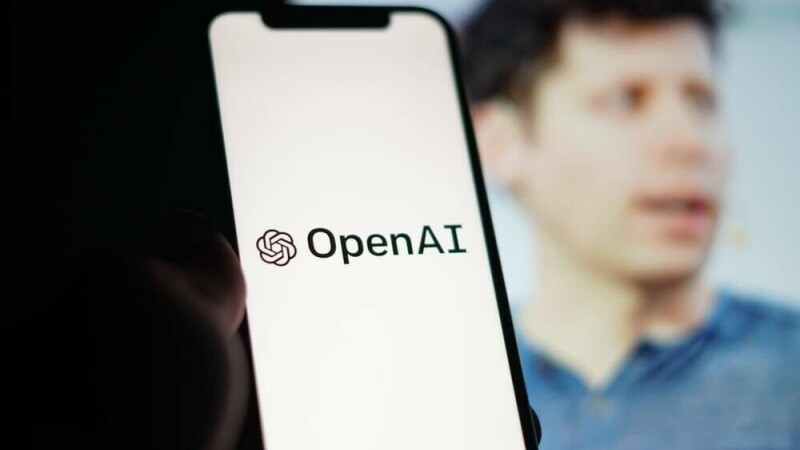
OpenAI co‑founder Greg Brockman testified that the company expects to spend $50 billion on compute this year, a figure tied to massive cloud and hardware deals. The revelation spotlights the economics of large‑scale AI and raises questions about profitability and investor expectations.

OpenAI introduces ATHENA-R1, an AI agent for treatment reasoning that outperforms language models and tool-use systems. Trained on 212 biomedical tools, ATHENA-R1 achieves 94.7% accuracy on open-ended drug reasoning and 82.9% on treatment reasoning. This breakthrough has significant implications for the healthcare industry and AI research.

OpenAI introduces IMCBench, a benchmark for multimodal large language models in image-grounded medical conversations, evaluating safety, accuracy, and uncertainty in diagnosis. The benchmark tests eight models, with Claude Opus 4.6 achieving the highest overall score. The results highlight the need for multi-dimensional evaluation frameworks in medical AI.
OpenAI has introduced GPT-Red, an advanced LLM designed as a 'super-hacker' to rigorously test and enhance the safety of its other AI models. This innovative system automates critical red-teaming evaluations, enabling OpenAI to proactively identify vulnerabilities and strengthen defenses against sophisticated cyberattacks. The move signifies a major leap in AI safety protocols, aiming to keep pace with evolving threats.

A heated public exchange unfolded on X between tech titans Elon Musk and Sam Altman, sparked by Apple's recent lawsuit against OpenAI. The high-profile spat underscores the escalating tensions surrounding AI policy, data privacy, and competitive practices among leading tech giants.
Elon Musk and Sam Altman are sparring on X after Apple filed a lawsuit against OpenAI, accusing the company of stealing trade secrets. The lawsuit has sparked a heated debate between Musk and Altman, with both sides trading insults. The outcome of the lawsuit could have significant implications for the AI industry.
OpenAI CEO suggests that video games can be a superior training data source than the internet for achieving AGI, with significant implications for the AI industry.
OpenAI CEO Sam Altman is in talks with President Trump to give the US government a 5% stake in the company, valued at $42.6 billion. This move could provide a safety net for Americans, mitigating the impact of AI on the labor market.
OpenAI introduces RobustMAD, a benchmark for evaluating multimodal small language models' real-world robustness in anomaly detection. The study reveals promising capabilities of compact models but also critical robustness gaps. RobustMAD provides actionable guidance for designing next-generation industrial inspection assistants.
OpenAI has launched GPT-5.6, a new family of models that promises to deliver more intelligence from every token, stronger performance per dollar, and more capability on demand. The models have been trained to get more useful work from every token and have achieved state-of-the-art results across various fields. GPT-5.6 sets a new standard for both intelligence and efficiency, outperforming previous and competing frontier models with fewer tokens and at lower estimated cost.
OpenAI introduces GPT-5.6, a groundbreaking AI model that sets new standards for intelligence and efficiency. This model achieves state-of-the-art results in various fields, outperforming previous models at lower costs. GPT-5.6 is available in three variants: Sol, Terra, and Luna, catering to different needs and budgets.
A California man has sued OpenAI and CEO Sam Altman, alleging that conversations with ChatGPT exacerbated his bipolar disorder, leading to delusions and a suicide attempt. The lawsuit highlights critical questions about AI safety, mental health safeguards, and the ethical responsibilities of generative AI developers. This case is part of a growing trend of legal challenges against OpenAI concerning its model's societal impact.

OpenAI's outage led to account deactivations, causing users to lose their work and face delays in their projects.
A groundbreaking MIT study reveals how labeling AI agents as 'employees' leads to worse human oversight, as companies like OpenAI push agentic AI tools. New research shows a 18% drop in error detection when AI work is framed as coming from 'digital coworkers.'
OpenAI and Sceye lead groundbreaking advancements in AI collaboration and stratospheric internet. Discover how these innovations are reshaping workplaces and global connectivity.
Anthropic unveils Claude Sonnet 5, a groundbreaking AI model offering enhanced agentic capabilities at lower costs. Targeting developers and businesses, the model aims to outperform competitors like GPT-5.5 and Gemini Pro while reducing operational expenses.
Get the top AI stories in your inbox once a day, no spam.
Frequently Asked Questions
How often is AI Pulse updated?
New stories are added every couple of hours as they break, so the feed stays current throughout the day.
Where does ThinkSuite source its AI news from?
We pull from 100+ sources, including company blogs, research labs, and established tech publications, then fact check and summarize each story before it goes live.
Can I filter the news by company or topic?
Yes. Use the sidebar filters to narrow stories down by company (OpenAI, Anthropic, Google, and more), industry, or event type like funding and research.
Is AI Pulse free to use?
Yes. AI Pulse is free for anyone who wants to keep up with AI news, no sign up required. The daily newsletter is optional if you want updates in your inbox.