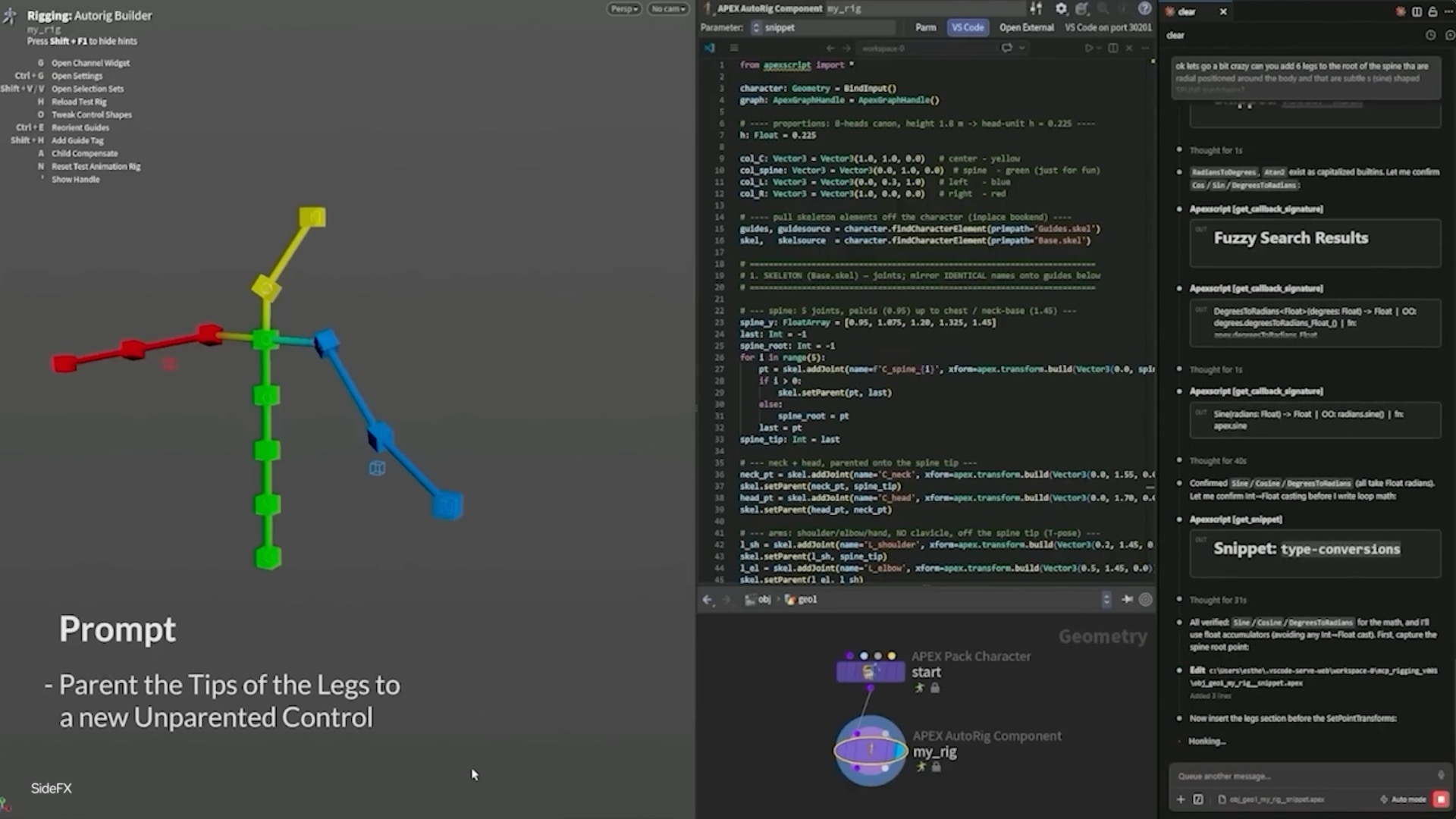
NVIDIA made significant strides at SIGGRAPH 2026, showcasing how agentic and physical AI are set to revolutionize graphics, simulation, and digital world creation. Key announcements included new tools for AI-driven content creation, advanced neural rendering techniques, and an open world model for local physical AI, redefining realism and automation across industries.

Researchers introduce PlanFlip, a framework to attack multi-agent LLM systems via planning-phase prompt injection, revealing vulnerabilities in popular models like GPT-5 and Llama-3.3-70B. The study highlights the importance of heterogeneous model diversity for security. PlanFlip's four attacks can corrupt downstream sub-tasks, evading keyword filters and compromising system integrity.
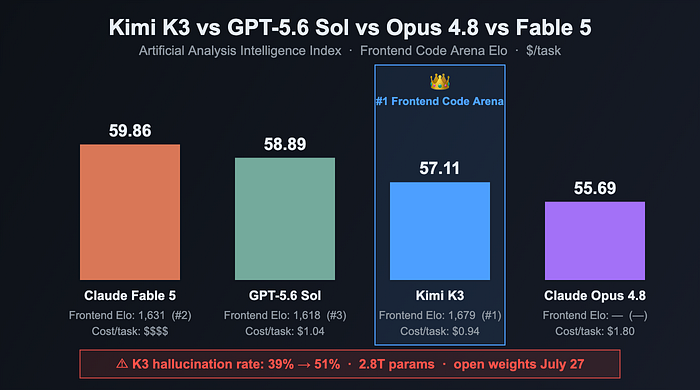
Moonshot AI's Kimi K3, a 2.8-trillion-parameter open-weight model, has surged to the #1 spot on Arena.ai's Frontend Code Arena, outperforming leading models like Claude Fable 5 and GPT-5.6 Sol. This impressive coding prowess is, however, tempered by a significant 51% hallucination rate, raising critical questions about its reliability for advanced agentic pipelines despite its benchmark victories.
OpenAI's latest study explores the necessity of executable world models, simplification, and verification in coding agents, revealing surprising results. The research evaluates four nested Codex-based agents, finding that every agent variant improves with stronger models and greater reasoning effort. The study's findings have significant implications for the development of Artificial General Intelligence (AGI).
The AI landscape is rapidly evolving as three Chinese labs—Moonshot AI, DeepSeek, and Zhipu AI—release powerful, open-weight Mixture-of-Experts (MoE) models. Kimi K3, DeepSeek V4 Pro, and GLM-5.2 are pushing the boundaries of scale and capability, offering trillion-scale parameters and million-token context windows for complex coding and agent workloads, fundamentally shifting the open-source AI leaderboard.

A new demo showcases an AI event venue operator built with MongoDB Atlas, Voyage, and LangGraph, enabling agents to remember prior events and respond to live operational changes. This technology has significant implications for the event management industry, particularly for high-stakes events like tennis tournaments. The demo highlights the potential for AI to improve event operations and enhance the fan experience.
NVIDIA has released DeepStream 9.1, a significant update bringing agentic AI capabilities to vision analytics. This release introduces Multi-View 3D Tracking (MV3DT) and AutoMagicCalib (AMC) as agentic skills, drastically simplifying cross-camera object tracking and calibration. Developers can now build sophisticated, multi-camera AI pipelines faster and with unprecedented accuracy.
Smartsheet has developed a pioneering remote Model Context Protocol (MCP) server on AWS, enabling AI clients like Claude Desktop and Amazon Quick to securely access and interact with enterprise data. This innovative solution optimizes AI interactions, significantly reduces token costs, and enhances the reliability of AI agents operating within Smartsheet's platform. It marks a significant step towards seamless AI integration in enterprise work management.
Amazon Bedrock has announced the general availability of its Managed Knowledge Base, a fully managed solution designed to simplify the creation of enterprise search capabilities for generative AI agents. This innovation dramatically reduces the complexity and time required to build robust Retrieval Augmented Generation (RAG) systems, enabling businesses to ground their AI applications in proprietary data with enhanced accuracy and security.
Meta researchers have introduced a novel neuro-symbolic agentic framework to significantly enhance the reasoning capabilities of Small Language Models (SLMs) like Gemma and Llama 3.2. This approach leverages knowledge graph grounding to overcome SLMs' historical struggles with complex, multi-hop logical tasks, offering a sustainable alternative to costly LLMs.
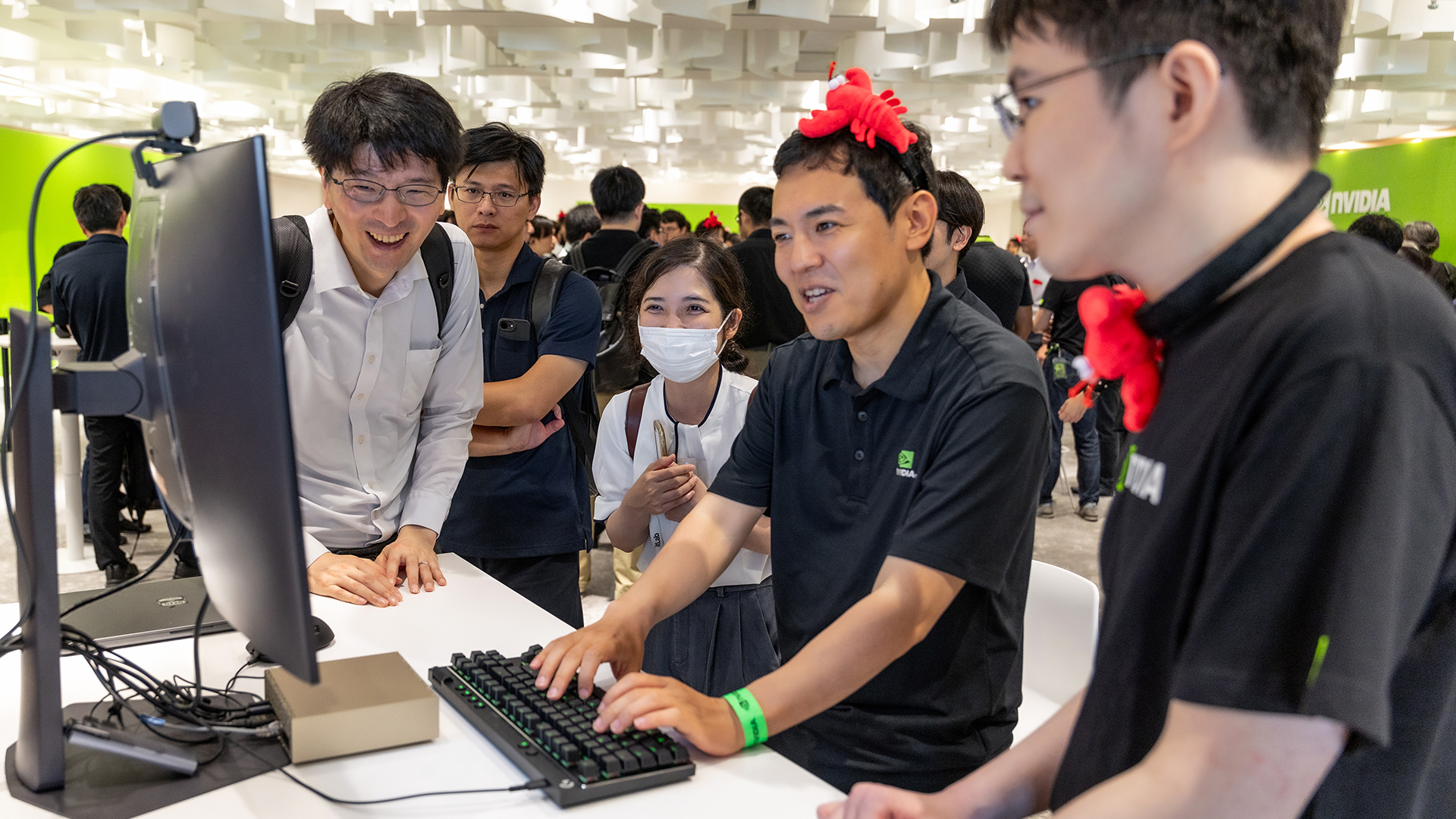
NVIDIA CEO Jensen Huang's recent visit to Japan underscored a major push towards integrating full-stack AI and robotics into every industry, emphasizing the concept of 'personal AI.' At the 'Build-a-Claw' event, developers showcased physical AI agents built with open models and NVIDIA's platform, signaling a new era for intelligent automation.
Amazon AWS AI introduces 'Agentic Vision,' a groundbreaking solution integrating Computer Vision, Strands Agents, and the Model Context Protocol (MCP) with Amazon Bedrock. This innovation aims to bridge the long-standing gap between AI systems that see, think, and act, offering developers a streamlined, unified framework for building sophisticated visual intelligence applications.
Amazon has significantly enhanced its QA Studio, built with Amazon Nova Act, by introducing robust capabilities for batch regression testing and seamless integration into CI/CD pipelines. This update enables parallel execution of test suites and brings AI-powered agentic QA automation into the heart of modern software delivery workflows, promising faster, more reliable deployments.
LongMedBench is a new benchmark for evaluating medical agents in long-horizon clinical decision-making. It provides a realistic assessment of AI models in medical care, emphasizing longitudinal interactions and multi-session decision-making. This benchmark has significant implications for the development of more accurate and reliable medical AI systems.
Google introduces Neuro-Agentic Control, a novel AI framework that combines LLM-based planning with a Time-Series Foundation Model (TimesFM) to achieve physics-grounded autonomous defense for industrial IoT. This architecture, featuring a "Counterfactual Physics Injection" mechanism, effectively prevents LLM hallucinations, ensuring safe and reliable control over critical security systems in operational technology environments.
Google has released a new model called Graph-Regularized Agentic Context Evolution (GRACE) to improve the reliability of long-horizon agentic context evolution under distribution shift. This model maintains the persistent instruction component as a typed semantic graph and validates proposed updates within the local typed neighborhoods of modified nodes. The results show a significant improvement in strict reliability compared to the baseline models.
OpenAI is transforming its flagship ChatGPT model from a conversational assistant into a dedicated workplace AI agent, signaling a major shift towards deeper enterprise integration and autonomous task execution. This move positions AI as a proactive 'employee' capable of enhancing productivity across various business functions.

OpenAI's GPT-5.6 Sol Ultra has solved the 50-year-old Cycle Double Cover Conjecture, a fundamental problem in graph theory. The proof was generated in under an hour using 64 subagents working in parallel.

OpenAI is facing significant user backlash over the recent launch of ChatGPT Work and GPT-5.6 Sol, admitting "we didn't get everything quite right." Users reported rapid usage limit exhaustion, a confusing desktop app, and degraded multi-agent workflows, prompting OpenAI to scramble for urgent fixes to UX and cost clarity.
Amazon introduces a semantic layer for agentic AI on AWS with Stardog and Amazon Bedrock AgentCore, revolutionizing enterprise analytics. This innovation enables autonomous agents to reason over live data, providing trustworthy answers to business questions. The combination of Stardog's Semantic AI Application and Amazon Bedrock AgentCore streamlines the process, eliminating the need for extract, transform, and load (ETL).
Get the top AI stories in your inbox once a day, no spam.
Frequently Asked Questions
How often is AI Pulse updated?
New stories are added every couple of hours as they break, so the feed stays current throughout the day.
Where does ThinkSuite source its AI news from?
We pull from 100+ sources, including company blogs, research labs, and established tech publications, then fact check and summarize each story before it goes live.
Can I filter the news by company or topic?
Yes. Use the sidebar filters to narrow stories down by company (OpenAI, Anthropic, Google, and more), industry, or event type like funding and research.
Is AI Pulse free to use?
Yes. AI Pulse is free for anyone who wants to keep up with AI news, no sign up required. The daily newsletter is optional if you want updates in your inbox.