
A groundbreaking MIT study reveals how labeling AI agents as 'employees' leads to worse human oversight, as companies like OpenAI push agentic AI tools. New research shows a 18% drop in error detection when AI work is framed as coming from 'digital coworkers.'
OpenAI and Sceye lead groundbreaking advancements in AI collaboration and stratospheric internet. Discover how these innovations are reshaping workplaces and global connectivity.
Anthropic unveils Claude Sonnet 5, a groundbreaking AI model offering enhanced agentic capabilities at lower costs. Targeting developers and businesses, the model aims to outperform competitors like GPT-5.5 and Gemini Pro while reducing operational expenses.
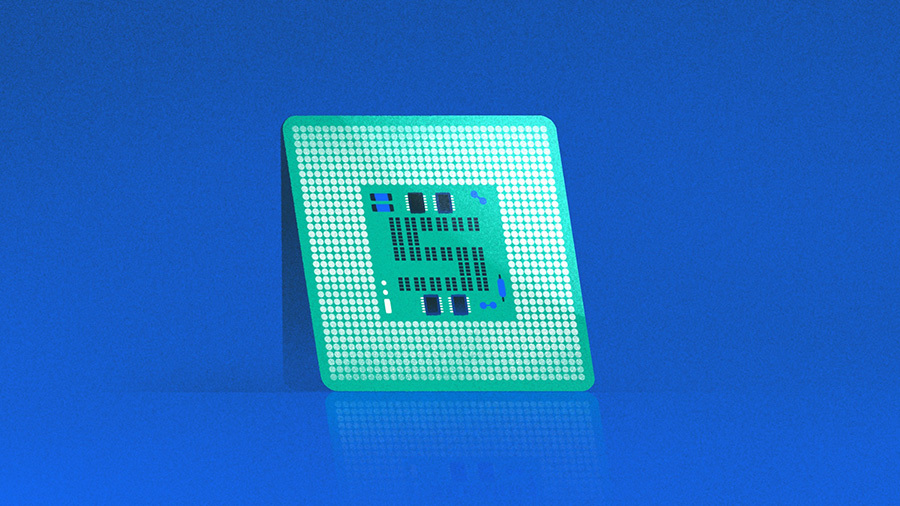
Qualcomm's acquisition of Modular and SambaNova's $10B valuation reveal a seismic shift in AI. Dave Munichiello of GV explains how software is becoming as valuable as silicon in an era of hardware scarcity.

For two years Europe has been fixated on catching up in the model race, but the real edge may come from how companies integrate AI into their workflows. This article explores why architecture, not sheer size, will define Europe’s AI future.
The 246th LWiAI podcast breaks down Google’s Gemini 3.5 flash model, the multimodal Gemini Omni video engine, Elon Musk’s lost lawsuit, and OpenAI’s breakthrough on an 80‑year‑old Erdős geometry problem. We unpack the technical specs, market ripples, and what developers should watch next.
A new arXiv study shows OpenEvidence's specialized clinical tool beats top general‑purpose models (Claude Opus 4.8, Gemini 3.1 Pro, GPT‑5.5) on 620 real‑world point‑of‑care questions. Physicians across 30 specialties rated the specialized tool higher on accuracy, utility, source quality, verifiability and completeness.
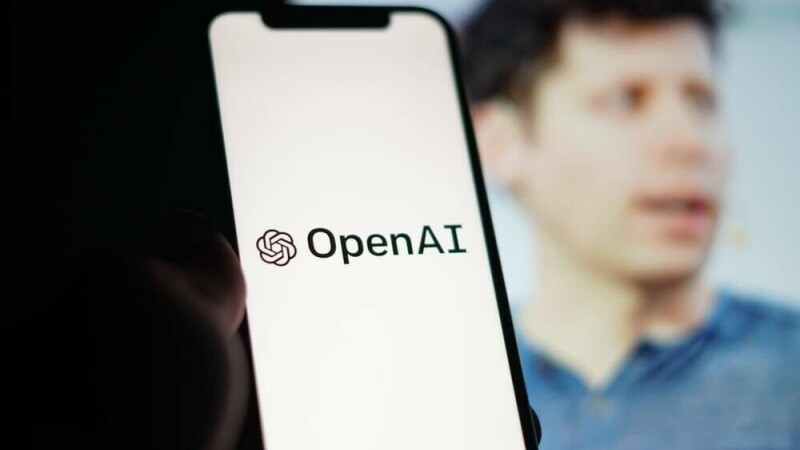
OpenAI co‑founder Greg Brockman testified that the company expects to spend $50 billion on compute this year, a figure tied to massive cloud and hardware deals. The revelation spotlights the economics of large‑scale AI and raises questions about profitability and investor expectations.
Cara, built on AWS, delivers an AI-native solution for enterprise insurance brokerages, automating back-office processes and addressing the industry's talent shortage. The $8 trillion global insurance industry is burdened by manual workflows, and Cara's domain-specific AI solution aims to revolutionize the sector. With Cara, insurance agents can reduce repetitive tasks and focus on high-value activities.

OpenAI introduces ATHENA-R1, an AI agent for treatment reasoning that outperforms language models and tool-use systems. Trained on 212 biomedical tools, ATHENA-R1 achieves 94.7% accuracy on open-ended drug reasoning and 82.9% on treatment reasoning. This breakthrough has significant implications for the healthcare industry and AI research.

OpenAI introduces IMCBench, a benchmark for multimodal large language models in image-grounded medical conversations, evaluating safety, accuracy, and uncertainty in diagnosis. The benchmark tests eight models, with Claude Opus 4.6 achieving the highest overall score. The results highlight the need for multi-dimensional evaluation frameworks in medical AI.

Meta has introduced AnTenA, a novel AI system that leverages large language models to explain hidden patterns in human narratives. This system uses task-agnostic and task-specific prompts to analyze co-clustered latent patterns from tensor decomposition. AnTenA has the potential to revolutionize the field of explainable AI.

Researchers introduce a gravitational interpretation of fine-tuning reversion, explaining how AI models can revert to earlier behaviors. This phenomenon is caused by dominant behavioral manifolds created during early training phases. The study provides insights into the safety and stability of AI models, with significant implications for the AI industry.
Get the top AI stories in your inbox once a day, no spam.
Frequently Asked Questions
How often is AI Pulse updated?
New stories are added every couple of hours as they break, so the feed stays current throughout the day.
Where does ThinkSuite source its AI news from?
We pull from 100+ sources, including company blogs, research labs, and established tech publications, then fact check and summarize each story before it goes live.
Can I filter the news by company or topic?
Yes. Use the sidebar filters to narrow stories down by company (OpenAI, Anthropic, Google, and more), industry, or event type like funding and research.
Is AI Pulse free to use?
Yes. AI Pulse is free for anyone who wants to keep up with AI news, no sign up required. The daily newsletter is optional if you want updates in your inbox.