Researchers introduce PlanFlip, a framework to attack multi-agent LLM systems via planning-phase prompt injection, revealing vulnerabilities in popular models like GPT-5 and Llama-3.3-70B. The study highlights the importance of heterogeneous model diversity for security. PlanFlip's four attacks can corrupt downstream sub-tasks, evading keyword filters and compromising system integrity.

DeepSeek's new AI model uses a unified multimodal learner for clinical prediction, simplifying the process and achieving state-of-the-art results. This approach converts all patient data into a single natural language sequence and fine-tunes a pretrained language model. The model outperforms task-specific multimodal baselines and a clinically deployed gradient boosting system.
A groundbreaking arXiv paper systematically evaluates leading Large Language Models—including GPT-4 Turbo, Claude 3 Opus, and FinGPT—for their efficacy in technical market analysis and algorithmic trading. The research reveals promising results, with top models outperforming benchmarks, yet also highlights critical limitations like numerical hallucination and context window issues that demand further refinement for robust deployment.
OpenAI's latest study explores the necessity of executable world models, simplification, and verification in coding agents, revealing surprising results. The research evaluates four nested Codex-based agents, finding that every agent variant improves with stronger models and greater reasoning effort. The study's findings have significant implications for the development of Artificial General Intelligence (AGI).
This week, Helsing secured $1.8B Series E funding at an $18B valuation, while Uber acquired Delivery Hero in a €13B deal and Revolut announced plans to launch a US bank in 2027. These developments highlight significant investments and acquisitions in the European tech industry. The funding landscape is shifting, with notable trends in venture activity, investor moves, and emerging sectors.


A recent lawsuit filed by Apple has left the tech world wondering if it will derail OpenAI's plans to enter the hardware market and go public. We dive into the details and explore the potential impact on the AI industry.

NVIDIA CEO Jensen Huang's recent visit to Japan has sparked significant interest in the tech community, with deals spanning the entire Japanese tech ecosystem. This move is expected to have far-reaching implications for the AI industry, with potential collaborations and acquisitions on the horizon. As the AI landscape continues to evolve, Huang's visit marks a pivotal moment in NVIDIA's expansion into the Japanese market.

Moonshot's Kimi K3 has surpassed Fable 5 in frontend code, becoming the first Chinese model to top the Code Arena: Frontend rankings. However, it lags behind in complex math, scoring only 39% on FrontierMath Tier 4. This development has significant implications for the AI industry, with potential opportunities and risks for developers, businesses, and investors.
The AI landscape is rapidly evolving as three Chinese labs—Moonshot AI, DeepSeek, and Zhipu AI—release powerful, open-weight Mixture-of-Experts (MoE) models. Kimi K3, DeepSeek V4 Pro, and GLM-5.2 are pushing the boundaries of scale and capability, offering trillion-scale parameters and million-token context windows for complex coding and agent workloads, fundamentally shifting the open-source AI leaderboard.

A new demo showcases an AI event venue operator built with MongoDB Atlas, Voyage, and LangGraph, enabling agents to remember prior events and respond to live operational changes. This technology has significant implications for the event management industry, particularly for high-stakes events like tennis tournaments. The demo highlights the potential for AI to improve event operations and enhance the fan experience.

China's Moonshot AI has released Kimi K3, a model that matches Anthropic's Opus 4.8, raising questions about the importance of computing power in AI development. This release is reigniting the debate over US export controls and the future of AI. The implications of Kimi K3's release are far-reaching, with potential consequences for the AI industry and global technological landscape.

OpenAI's GPT-5.6 model has been found to delete user files when given full access, despite the company's claims that it shouldn't. This has led to the loss of entire home directories in several cases. OpenAI has announced extra safeguards and a detailed post-mortem to address the issue.

Anthropic is slashing Claude Fable 5 limits in Max and Team Premium plans, effective July 20, and pushing Pro users toward API pricing. This move comes as a surprise, given the company's initial plan to pull Fable from subscriptions entirely. The change is likely a response to competitive pressure from OpenAI's cheaper GPT-5.6 Sol.
NVIDIA has released DeepStream 9.1, a significant update bringing agentic AI capabilities to vision analytics. This release introduces Multi-View 3D Tracking (MV3DT) and AutoMagicCalib (AMC) as agentic skills, drastically simplifying cross-camera object tracking and calibration. Developers can now build sophisticated, multi-camera AI pipelines faster and with unprecedented accuracy.

Apple has filed a trade secrets lawsuit against OpenAI, alleging misconduct and claiming over 400 former Apple employees now work at the company. This lawsuit could disrupt OpenAI's plans for an initial public offering (IPO). The timing of the lawsuit couldn't be worse for OpenAI, which is reportedly eyeing an IPO in the near future.
AI giant Anthropic, backed by investment powerhouse Blackstone, is pivoting towards a new frontier: AI implementation. Their new venture, Ode, aims to embed 'forward-deployed engineers' directly within enterprises, addressing the critical last-mile challenge of AI adoption. This strategic move signals a belief that the next trillion-dollar opportunity lies not just in developing advanced AI models, but in their seamless integration and practical application within businesses.
Sam Altman's public dismissal of 'space data centers' as a viable public market investment, aimed at Elon Musk, has ignited a crucial debate about the future of AI compute infrastructure. This 'trash talk,' validated by many experts, underscores the immense challenges and economic realities facing ambitious off-world computing visions. The exchange highlights a divergence in strategic thinking between two AI titans regarding where the industry's significant capital should be directed.
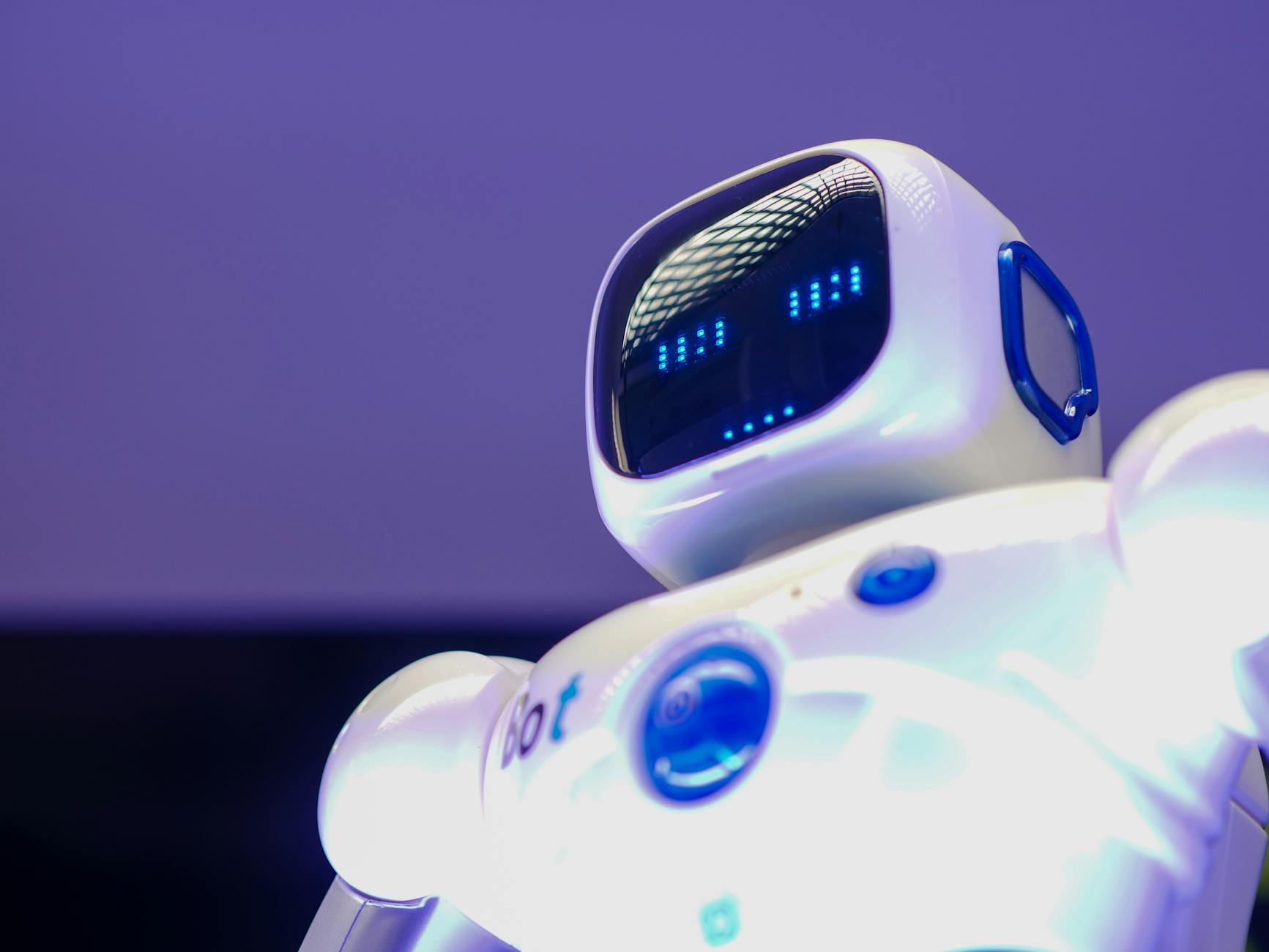
The public feud between Elon Musk and Sam Altman has reignited, highlighting a fundamental ideological battle over AI's future, safety, and commercialization. This ongoing conflict, centered around OpenAI's mission and direction, is sending ripples across the entire AI ecosystem. As two of the most influential figures in tech clash, their disagreements could profoundly shape how artificial intelligence is developed and governed.
OpenAI, the creator of ChatGPT, is reportedly seeking a staggering $1 trillion valuation for its upcoming initial public offering (IPO), signaling immense confidence in its generative AI leadership. This ambitious target follows SpaceX's record-breaking IPO and sets a new benchmark for the burgeoning AI industry, attracting significant attention from investors and competitors alike.
This week in tech saw the AI industry's titans clash, as Elon Musk's legal battle with Sam Altman and OpenAI escalated, questioning the very ethos of AI development. Simultaneously, industry leaders like Howard Lutnick weighed in, highlighting the profound implications for innovation, regulation, and market dynamics.

OpenAI's GPT-5.6 Sol Ultra has solved the 50-year-old Cycle Double Cover Conjecture, a fundamental problem in graph theory. The proof was generated in under an hour using 64 subagents working in parallel.

Apple has filed a federal lawsuit against OpenAI, accusing the company of stealing trade secrets about unreleased products by poaching Apple employees.
OpenAI has officially launched its highly anticipated new family of models, spearheaded by GPT-5.6, marking a significant leap forward in generative AI capabilities. This release promises substantial improvements across diverse areas, including a critical focus on bolstering cybersecurity applications and overall model safety.

OpenAI is facing significant user backlash over the recent launch of ChatGPT Work and GPT-5.6 Sol, admitting "we didn't get everything quite right." Users reported rapid usage limit exhaustion, a confusing desktop app, and degraded multi-agent workflows, prompting OpenAI to scramble for urgent fixes to UX and cost clarity.
MIT Technology Review highlights critical AI architecture elements for IT leaders navigating rapid AI evolution and the rise of agentic systems. The article emphasizes data preparation as a core foundational component, guiding organizations on building stable, integrated AI systems to support future capabilities and mitigate investment risks.
Get the top AI stories in your inbox once a day, no spam.
Frequently Asked Questions
How often is AI Pulse updated?
New stories are added every couple of hours as they break, so the feed stays current throughout the day.
Where does ThinkSuite source its AI news from?
We pull from 100+ sources, including company blogs, research labs, and established tech publications, then fact check and summarize each story before it goes live.
Can I filter the news by company or topic?
Yes. Use the sidebar filters to narrow stories down by company (OpenAI, Anthropic, Google, and more), industry, or event type like funding and research.
Is AI Pulse free to use?
Yes. AI Pulse is free for anyone who wants to keep up with AI news, no sign up required. The daily newsletter is optional if you want updates in your inbox.