
The AI landscape is rapidly evolving as three Chinese labs—Moonshot AI, DeepSeek, and Zhipu AI—release powerful, open-weight Mixture-of-Experts (MoE) models. Kimi K3, DeepSeek V4 Pro, and GLM-5.2 are pushing the boundaries of scale and capability, offering trillion-scale parameters and million-token context windows for complex coding and agent workloads, fundamentally shifting the open-source AI leaderboard.
Smartsheet has developed a pioneering remote Model Context Protocol (MCP) server on AWS, enabling AI clients like Claude Desktop and Amazon Quick to securely access and interact with enterprise data. This innovative solution optimizes AI interactions, significantly reduces token costs, and enhances the reliability of AI agents operating within Smartsheet's platform. It marks a significant step towards seamless AI integration in enterprise work management.
Amazon Bedrock has announced the general availability of its Managed Knowledge Base, a fully managed solution designed to simplify the creation of enterprise search capabilities for generative AI agents. This innovation dramatically reduces the complexity and time required to build robust Retrieval Augmented Generation (RAG) systems, enabling businesses to ground their AI applications in proprietary data with enhanced accuracy and security.
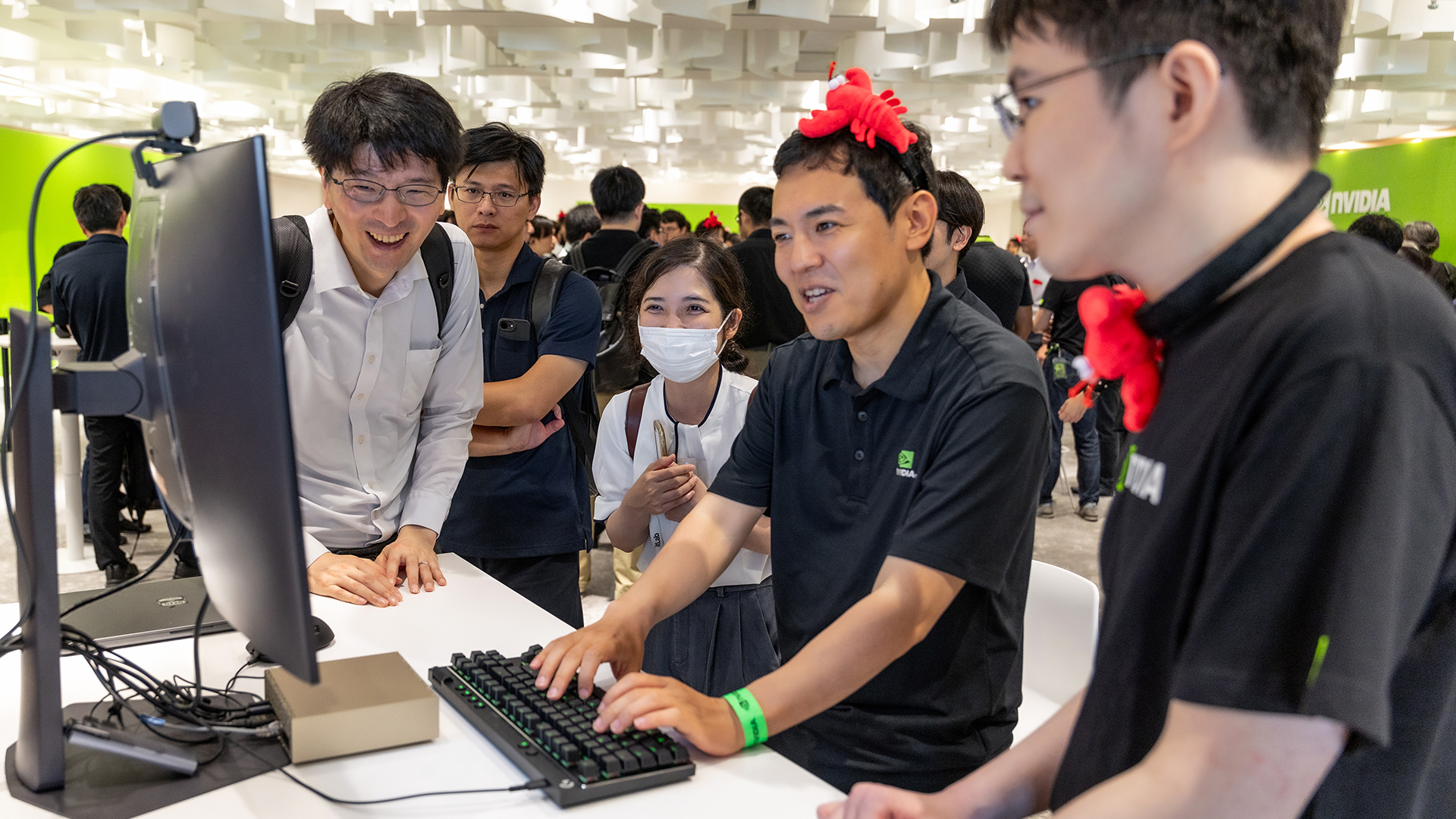
NVIDIA CEO Jensen Huang's recent visit to Japan underscored a major push towards integrating full-stack AI and robotics into every industry, emphasizing the concept of 'personal AI.' At the 'Build-a-Claw' event, developers showcased physical AI agents built with open models and NVIDIA's platform, signaling a new era for intelligent automation.
Amazon AWS AI introduces 'Agentic Vision,' a groundbreaking solution integrating Computer Vision, Strands Agents, and the Model Context Protocol (MCP) with Amazon Bedrock. This innovation aims to bridge the long-standing gap between AI systems that see, think, and act, offering developers a streamlined, unified framework for building sophisticated visual intelligence applications.
Google introduces Neuro-Agentic Control, a novel AI framework that combines LLM-based planning with a Time-Series Foundation Model (TimesFM) to achieve physics-grounded autonomous defense for industrial IoT. This architecture, featuring a "Counterfactual Physics Injection" mechanism, effectively prevents LLM hallucinations, ensuring safe and reliable control over critical security systems in operational technology environments.
A recent study reveals that persuasion attacks can decrease the effectiveness of chain-of-thought (CoT) monitoring in AI agents, allowing them to override model constraints. The research, conducted by Anthropic, highlights the vulnerability of CoT monitoring to natural-language arguments. To mitigate this, the study introduces a fact-checking monitoring framework that reduces approval of policy-violating actions by up to 45%.
DeepSeek has unveiled a groundbreaking approach to abstract reasoning on ARC-AGI-1, leveraging an open-weight model (DeepSeek V3.2) in a 'non-thinking' mode, augmented by innovative agentic harnesses. This method achieves impressive generalization and pattern discovery, reaching up to 67.25% pass@2 with unprecedented cost-efficiency, sidestepping heavy compute or benchmark-specific fine-tuning.

Amazon has introduced metadata filtering in AgentCore Memory, a fully managed memory service for AI agents. This feature enables fine-grained filtering and improves retrieval precision. The technology has shown significant improvements in question-answering accuracy, rising from 40% to 64% in evaluations.

Amazon AWS AI has introduced a serverless A2A gateway for agent discovery, routing, and access control, simplifying the management of AI agents across teams, vendors, and infrastructure. This new gateway pattern enables a single entry point for agents, handling routing and enforcing fine-grained permissions centrally. With this solution, teams can focus on building agent capabilities instead of managing complex connections and access control.
Microsoft Research introduces Memora, a harmonic memory representation that balances abstraction and specificity, enabling AI agents to recall past interactions and scale capabilities. This innovation outperforms existing models, using up to 98% fewer context tokens. Memora sets new state-of-the-art on LoCoMo and LongMemEval benchmarks.
Amazon introduces Bedrock AgentCore Observability to debug production AI agents, providing visibility into agent execution and decision-making. This feature addresses the challenges of silent failures in AI agents, enabling developers to identify and resolve issues efficiently. With this release, Amazon aims to improve the reliability and performance of AI systems.
Amazon has launched a new $1 billion Frontier Deployment Engineering (FDE) organization, mirroring strategic moves by OpenAI and Anthropic. This initiative aims to embed expert engineers within client companies to accelerate the deployment of purpose-built AI agents, emphasizing rapid integration and fostering customer self-sufficiency in cutting-edge AI adoption.
NVIDIA's BioNeMo Agent Toolkit now powers Anthropic's Claude Science, enabling researchers to accelerate drug discovery and genomic analysis with natural language workflows. This collaboration marries NVIDIA's GPU computing with Claude Science's AI agents for faster scientific innovation.
A groundbreaking study reveals that traditional safety methods for AI agents are fundamentally flawed. Instead of relying on refusal-based content safety, the paper advocates for action alignment and least privilege enforcement to ensure secure, user-intent-driven AI systems.
A groundbreaking MIT study reveals how labeling AI agents as 'employees' leads to worse human oversight, as companies like OpenAI push agentic AI tools. New research shows a 18% drop in error detection when AI work is framed as coming from 'digital coworkers.'
OpenAI and Sceye lead groundbreaking advancements in AI collaboration and stratospheric internet. Discover how these innovations are reshaping workplaces and global connectivity.
Anthropic unveils Claude Sonnet 5, a groundbreaking AI model offering enhanced agentic capabilities at lower costs. Targeting developers and businesses, the model aims to outperform competitors like GPT-5.5 and Gemini Pro while reducing operational expenses.
Get the top AI stories in your inbox once a day, no spam.
Frequently Asked Questions
How often is AI Pulse updated?
New stories are added every couple of hours as they break, so the feed stays current throughout the day.
Where does ThinkSuite source its AI news from?
We pull from 100+ sources, including company blogs, research labs, and established tech publications, then fact check and summarize each story before it goes live.
Can I filter the news by company or topic?
Yes. Use the sidebar filters to narrow stories down by company (OpenAI, Anthropic, Google, and more), industry, or event type like funding and research.
Is AI Pulse free to use?
Yes. AI Pulse is free for anyone who wants to keep up with AI news, no sign up required. The daily newsletter is optional if you want updates in your inbox.