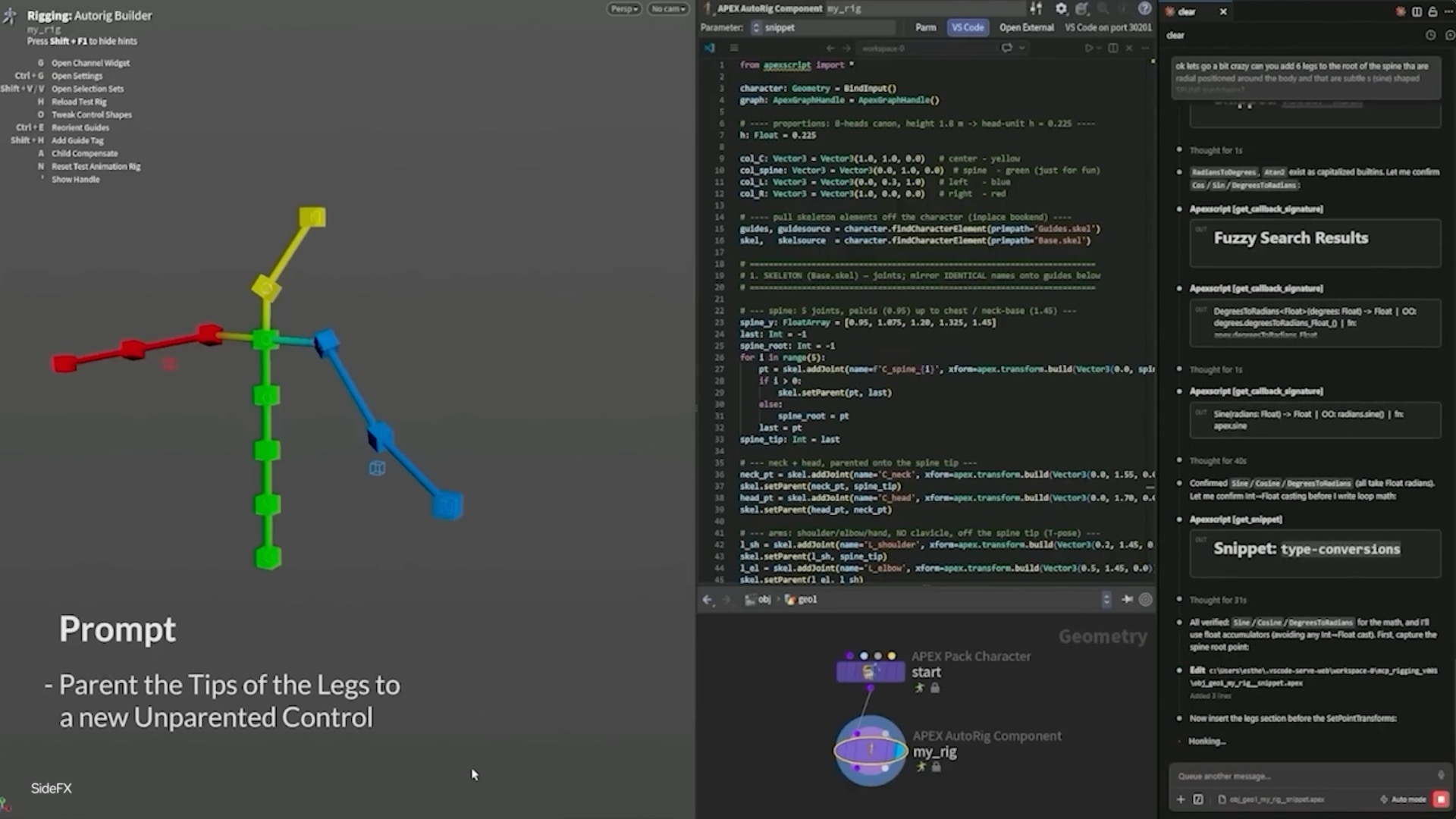
NVIDIA made significant strides at SIGGRAPH 2026, showcasing how agentic and physical AI are set to revolutionize graphics, simulation, and digital world creation. Key announcements included new tools for AI-driven content creation, advanced neural rendering techniques, and an open world model for local physical AI, redefining realism and automation across industries.

NVIDIA CEO Jensen Huang's recent visit to Japan underscored a major push towards integrating full-stack AI and robotics into every industry, emphasizing the concept of 'personal AI.' At the 'Build-a-Claw' event, developers showcased physical AI agents built with open models and NVIDIA's platform, signaling a new era for intelligent automation.

Amazon has significantly enhanced its QA Studio, built with Amazon Nova Act, by introducing robust capabilities for batch regression testing and seamless integration into CI/CD pipelines. This update enables parallel execution of test suites and brings AI-powered agentic QA automation into the heart of modern software delivery workflows, promising faster, more reliable deployments.

OpenAI CEO Sam Altman has reversed his stance on AI's impact on jobs, now believing it creates more jobs than it eliminates. This shift in perspective is significant, as Altman had previously warned of potential mass layoffs due to AI. The change in stance is also shared by Anthropic CEO Dario Amodei, who now views automation as a productivity multiplier rather than a job killer.
OpenAI is transforming its flagship ChatGPT model from a conversational assistant into a dedicated workplace AI agent, signaling a major shift towards deeper enterprise integration and autonomous task execution. This move positions AI as a proactive 'employee' capable of enhancing productivity across various business functions.
Amazon AWS has unveiled an AI-powered AWS Support Companion, built on Amazon Bedrock AgentCore, designed to dramatically reduce the time and effort spent on incident investigations. This innovative solution centralizes critical AWS operations, enabling engineers to analyze logs, search documentation, query community knowledge, and create support cases from a single conversational interface. It promises to transform operational efficiency and accelerate resolution times for AWS infrastructure management.
Discover the leading multimodal Large Language Models (LLMs) transforming AI, including GPT-5.5 and Gemini 3 Pro, and their applications in enterprise innovation, research, and software development. These models offer powerful capabilities for text, images, audio, video, and code understanding, revolutionizing virtual assistants, automation, and creative digital experiences. With their advanced reasoning abilities and integration with various tools, multimodal LLMs are poised to reshape businesses and industries worldwide.
Anthropic's new AI Workbench has demonstrated its capability to map complex scientific fields for an astonishingly low cost of $26, signaling a paradigm shift in research. This groundbreaking efficiency promises to democratize scientific discovery, making advanced research accessible and affordable to a wider array of institutions and individuals. The development underscores the transformative potential of AI to accelerate innovation across every scientific discipline.

Amazon Web Services (AWS) has unveiled a groundbreaking solution leveraging Amazon Bedrock and AWS HealthLake to build an agentic AI healthcare claims pipeline. This innovation directly addresses the industry's costly manual claims processing, promising significant reductions in human oversight and improved accuracy through intelligent automation.
Podcasting platform Riverside has expanded into newsletter publishing with an AI-driven feature that transforms audio content into written newsletters. This move aims to streamline content repurposing for creators, leveraging AI to summarize podcasts, generate summaries, and publish cross-platform newsletters.
A revolutionary method called Poller leverages large language models to evaluate poetry understanding with near-human accuracy, reducing errors by up to 94.55% in specific dimensions. This AI advancement bridges automation and human expertise in literary analysis.
Meta researchers achieved 87.69% accuracy in predicting primary ICD-10 diagnosis categories by combining frozen medical LLM representations with multimodal EHR data. Their approach outperformed existing models and demonstrated strong cross-dataset adaptability.
A groundbreaking MIT study reveals how labeling AI agents as 'employees' leads to worse human oversight, as companies like OpenAI push agentic AI tools. New research shows a 18% drop in error detection when AI work is framed as coming from 'digital coworkers.'
OpenAI and Sceye lead groundbreaking advancements in AI collaboration and stratospheric internet. Discover how these innovations are reshaping workplaces and global connectivity.
Get the top AI stories in your inbox once a day, no spam.
Frequently Asked Questions
How often is AI Pulse updated?
New stories are added every couple of hours as they break, so the feed stays current throughout the day.
Where does ThinkSuite source its AI news from?
We pull from 100+ sources, including company blogs, research labs, and established tech publications, then fact check and summarize each story before it goes live.
Can I filter the news by company or topic?
Yes. Use the sidebar filters to narrow stories down by company (OpenAI, Anthropic, Google, and more), industry, or event type like funding and research.
Is AI Pulse free to use?
Yes. AI Pulse is free for anyone who wants to keep up with AI news, no sign up required. The daily newsletter is optional if you want updates in your inbox.