Meituan Debuts 1.6T LongCat-2.5 Agent Model Built Without Nvidia GPUs

Chinese tech leader Meituan has released LongCat-2.5, a 1.6-trillion-parameter open-weights agent model trained entirely on domestic hardware without Nvidia chips. Capable of handling 1M context tokens and autonomous coding tasks, the model achieves near-parity with top Western AI models like Claude Opus 5.
- Meituan releases weights for LongCat-2.5, a 1.6-trillion-parameter open-weights agent model.
- The model was trained and deployed entirely without Nvidia hardware, using domestic Chinese accelerators.
- Features a 1-million-token context window and up to 128,000 generated tokens per single response.
- Utilizes Mixture-of-Experts (MoE) architecture with 48 billion parameters active per token.
- Performs near top Western models like Claude Opus 5 on autonomous coding and agent benchmarks.
Chinese tech giant Meituan has released LongCat-2.5, a 1.6-trillion-parameter Mixture-of-Experts agent model trained entirely on domestic hardware without using Nvidia GPUs. Capable of processing 1-million-token contexts and executing multi-step autonomous workflows, LongCat-2.5 marks a pivotal shift in sovereign AI architecture and global chip independence.
What Did Meituan Announce with LongCat-2.5?
One week after its initial unveiling, Meituan officially released the public weights for LongCat-2.5, an open-weights agent model designed for multi-step autonomous execution and complex software engineering tasks. Featuring 1.6 trillion total parameters, the model is engineered specifically to handle long-context reasoning, code generation, and multi-modal input processing.
What sets LongCat-2.5 apart from previous open-source releases is its hardware lineage: the entire model was trained and deployed without touching Nvidia hardware. By successfully training a trillion-parameter scale model on domestic Chinese silicon—specifically utilizing clusters of Huawei Ascend accelerators—Meituan has demonstrated that frontier-grade artificial intelligence is achievable outside the dominant Western semiconductor ecosystem.
How Does the LongCat-2.5 Architecture Work?
LongCat-2.5 utilizes a high-efficiency Mixture-of-Experts (MoE) architecture. Out of its 1.6 trillion total parameters, only approximately 48 billion parameters are activated per token. This selective activation keeps inference latency manageable while retaining the massive memory capacity required for complex reasoning.
Key architectural specifications include:
- 1,000,000 Token Context Window: Through its API, the model processes up to one million tokens simultaneously, allowing developers to feed entire software repositories or extended documentation into a single prompt.
- 128,000 Token Output Horizon: Unlike typical models capped at 4k or 8k output tokens, LongCat-2.5 can generate up to 128,000 continuous tokens in a single response, facilitating full script generation and comprehensive report creation.
- Native Tokenized Multimodality: Building on LongCat-2.0, version 2.5 converts incoming image inputs directly into native token streams alongside text, rather than relying on a separate vision encoder attached after pre-training.
- Toggleable Reasoning Modes: Users can dynamically enable or disable deep chain-of-thought reasoning depending on whether the task demands fast conversational output or deep algorithmic problem-solving.
Can Domestic Hardware Realistically Compete with Nvidia GPUs?
For years, industry analysts argued that high-parameter frontier models could only be trained on Nvidia's H100, B200, or CUDA-optimized hardware infrastructure. Meituan's accomplishment disproves the notion that non-Nvidia hardware presents an insurmountable bottleneck for frontier AI development.
A sample production deployment of LongCat-2.5 was demonstrated running efficiently on a cluster of 194 Huawei chips, proving that alternative hardware configurations can sustain heavy agentic workloads when software frameworks are tailored to target domestic hardware compilers. This breakthrough has immense implications for global technology sovereignty, supply chain resilience, and open-source infrastructure.
What Are the Benchmark Results for LongCat-2.5?
In standard benchmark evaluations, LongCat-2.5 performs closely alongside leading proprietary Western models from early 2026. On terminal execution and autonomous coding benchmarks, the model trails Anthropic's Claude Opus 5 by only a narrow margin while outperforming most previous generation open-weights releases.
Its ability to maintain context coherence over hundreds of thousands of tokens makes it particularly effective for long-horizon agentic workflows, such as automated refactoring, continuous test suite generation, and multi-file code execution.
What this means for your business
The release of Meituan's LongCat-2.5 signals a fundamental shift in the global enterprise AI ecosystem. As high-parameter open-weights models trained on alternative hardware architectures achieve parity with top proprietary systems, enterprises are no longer locked into single-chip vendor ecosystems or expensive closed-source APIs. For modern organizations, capitalizing on state-of-the-art autonomous agents requires a resilient technical framework and proactive planning.
At ThinkSuite, we help enterprises navigate this rapidly evolving landscape through end-to-end custom AI tools development. Whether your team needs to integrate open-weights LLMs into internal environments or build bespoke generative AI solutions, our engineering team ensures seamless implementation. Furthermore, leveraging these autonomous model capabilities allows businesses to deploy advanced AI automation to stream multi-step workflows, reduce operational overhead, and power autonomous coding and support tasks.
To ensure your tech stack remains flexible amidst geopolitical and hardware shifts, our business strategy consulting experts assist leaders in evaluating multi-provider infrastructure and defining robust AI governance frameworks. By combining modular architecture with clear strategic roadmaps, ThinkSuite empowers organizations to harness frontier AI capabilities securely and cost-effectively.
Why it matters
The release of LongCat-2.5 breaks the industry assumption that top-tier 1T+ parameter models require Nvidia's proprietary CUDA ecosystem for training. By demonstrating that high-performing agent models can be trained on domestic non-Nvidia hardware, Meituan has altered the geopolitical and technological calculus for enterprise AI compute. For enterprises and AI software providers, open access to a 1.6T parameter agent model with a 1M token context window dramatically lowers the barrier to deploying fully autonomous internal agents. Organizations can now self-host powerful coding and reasoning models without incurring recurring per-token API taxes from monopolistic model vendors.
Market impact
The market impact of non-Nvidia trained models achieving parity with proprietary Western LLMs will reshuffle enterprise infrastructure strategies. Compute diversification will accelerate as cloud providers and enterprises look to hedge against chip shortages and rising hardware costs by integrating alternative accelerators. Furthermore, the availability of open weights for a 1.6T agent model places pressure on closed API providers to lower pricing and expand context windows, accelerating price-to-performance competition across the generative AI ecosystem.
Developer impact
Engineers and technical teams gain access to a powerful open model tailored for autonomous agent execution and multi-file code modification. The 128k output token capability enables long script generation without truncation, empowering developer tools and automated CI/CD pipelines.
What comes next
In the next 30 days, open-source developers will publish optimization runtimes for running LongCat-2.5 MoE sub-networks on consumer and hybrid cloud setups. Within 90 days, enterprise adoption of vendor-agnostic AI orchestration will rise as organizations test non-Nvidia cloud instances. Within 180 days, expect multiple non-US tech giants to launch competitive 1T+ open models trained entirely on localized hardware.
Meituan's architectural choice to integrate native vision tokenization alongside an MoE design shows how open-weights development is maturing rapidly. Activating only 48B parameters out of 1.6T total enables high compute efficiency during inference, making local and hybrid cloud deployments economically viable. While Nvidia retains software ecosystem dominance through CUDA, achievements like LongCat-2.5 demonstrate that non-Nvidia hardware compilers and custom cluster orchestrations are closing the performance gap. Companies must build modular AI pipelines that can easily swap model providers and compute backends as open alternatives continue to match proprietary capabilities.
ThinkSuite AI analysis
Frequently asked questions
What is Meituan LongCat-2.5 and why is its hardware training significant?
Meituan LongCat-2.5 is a 1.6-trillion-parameter open-weights agent model. Its release is significant because it was trained entirely on Chinese domestic hardware without using Nvidia GPUs, proving that high-performing frontier AI models can be developed independently of Western semiconductor supply chains.
How does the context window of LongCat-2.5 compare to other models?
LongCat-2.5 supports an input context window of up to 1 million tokens and an output generation horizon of 128,000 tokens, allowing it to process massive codebases or large documents and write continuous long-form output.
How can my business apply Meituan's LongCat-2.5 model and non-Nvidia hardware trends to our technical roadmap?
Businesses can apply this trend by adopting vendor-neutral architectures and evaluating open-weights agent models for internal tasks. Working with ThinkSuite for custom AI tools development allows organizations to integrate multi-provider LLMs, optimize compute efficiency, and automate complex workflows without relying solely on proprietary closed APIs.
Go deeper
The shift away from Nvidia GPUs creates a fertile market for platforms that abstract and optimize AI workloads across diverse hardware, while toolkits and services for non‑Nvidia accelerators open new revenue streams. Startups that enable flexible deployment, edge inference, and cost‑effective training stand to capture significant market share.
Hardware-Agnostic AI Deployment Platform
A SaaS that abstracts underlying compute, automatically profiling and optimizing large language models to run efficiently on any hardware, including AMD GPUs, custom ASICs, and CPUs.
All Opportunities (6)
Hardware-Agnostic AI Deployment Platform
medium competitionA SaaS that abstracts underlying compute, automatically profiling and optimizing large language models to run efficiently on any hardware, including AMD GPUs, custom ASICs, and CPUs.
Model Optimizer for Non‑Nvidia Accelerators
low competitionA developer toolkit that converts and compresses massive models (e.g., 1.6‑trillion‑parameter) to run on alternative GPUs and custom chips with minimal performance loss.
AI Agent Marketplace for Local Services
high competitionA curated marketplace where businesses can purchase plug‑and‑play AI agents powered by the 1.6T model for tasks like food delivery routing, customer support, and recommendation engines.
Edge AI Inference Engine for Consumer Devices
medium competitionA lightweight inference engine that shards portions of the massive model to run on edge devices using emerging custom AI chips, enabling offline intelligent features.
AI Hardware Benchmarking & Compliance Suite
low competitionA cloud‑based platform that benchmarks AI models across diverse hardware, providing compliance certifications for performance, energy efficiency, and security standards.
Training‑as‑a‑Service on Alternative GPUs
high competitionA cloud service offering scalable training of large models on cost‑effective non‑Nvidia GPUs and custom accelerators, with built‑in cost optimization tools.
💰 Investment Angles
- Enables rapid diversification away from Nvidia dominance, unlocking new hardware ecosystems
- Addresses a critical bottleneck for scaling trillion‑parameter models across global data centers
- High margin SaaS model with recurring revenue and strong defensibility via proprietary optimization algorithms
⚠️ Threatened Startups
- Run:AI
- Paperspace
- Lambda Labs
- Scale AI (infrastructure arm)
👩💻 Emerging Job Roles
- Hardware‑Agnostic AI Deployment Engineer
- Non‑Nvidia Model Optimization Specialist
- AI Edge Inference Architect
Sources
Google News - NVIDIA AI ↗More on NVIDIA

Nvidia Facing Scrutiny Over Reported $12B Indirect China Chip Orders
A Wall Street Journal report reveals that Singapore-based Megaspeed brokered nearly $12 billion in high-performance Nvidia chip orders for Chinese firms between March 2024 and June 2025. The indirect supply channel underscores growing compliance challenges and regulatory friction surrounding AI hardware exports.
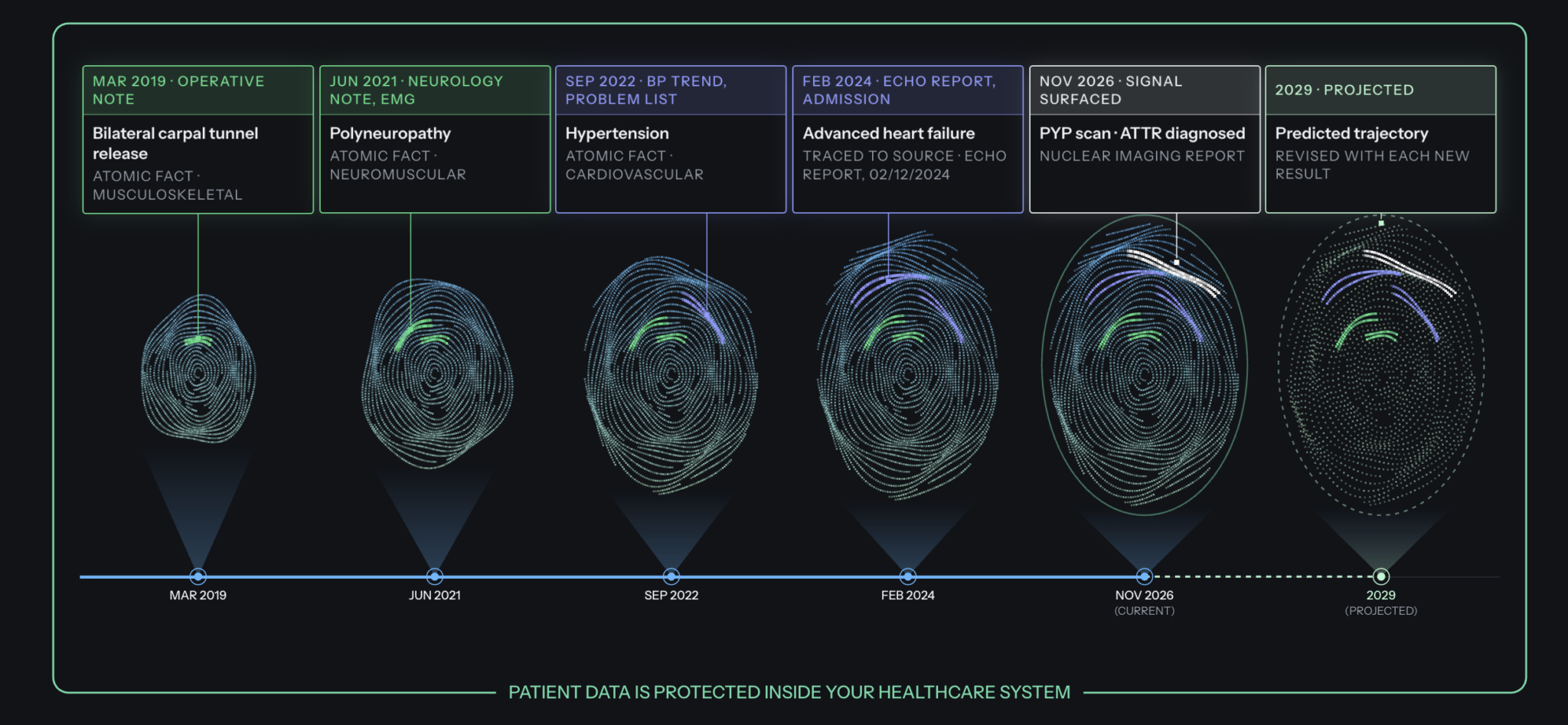
NVIDIA & Dyania Health Deploy On-Premise AI for Patient Care
Dyania Health uses NVIDIA-accelerated computing to run Synapsis AI, a clinical reasoning engine that processes unstructured hospital records within secure firewalls. This approach helps clinicians analyze patient histories faster while keeping health data completely private.

NVIDIA Board Reportedly Considers Ousting CEO Jensen Huang: Market & AI Impact
Reports indicate NVIDIA's board is considering the departure of longtime CEO Jensen Huang following personal conduct allegations and internal governance reviews. The news triggered an 8% drop in NVIDIA stock, raising critical questions for enterprise AI roadmaps reliant on GPU infrastructure.