Researchers introduce PlanFlip, a framework to attack multi-agent LLM systems via planning-phase prompt injection, revealing vulnerabilities in popular models like GPT-5 and Llama-3.3-70B. The study highlights the importance of heterogeneous model diversity for security. PlanFlip's four attacks can corrupt downstream sub-tasks, evading keyword filters and compromising system integrity.

DeepSeek's new AI model uses a unified multimodal learner for clinical prediction, simplifying the process and achieving state-of-the-art results. This approach converts all patient data into a single natural language sequence and fine-tunes a pretrained language model. The model outperforms task-specific multimodal baselines and a clinically deployed gradient boosting system.
A groundbreaking arXiv paper systematically evaluates leading Large Language Models—including GPT-4 Turbo, Claude 3 Opus, and FinGPT—for their efficacy in technical market analysis and algorithmic trading. The research reveals promising results, with top models outperforming benchmarks, yet also highlights critical limitations like numerical hallucination and context window issues that demand further refinement for robust deployment.
OpenAI's latest study explores the necessity of executable world models, simplification, and verification in coding agents, revealing surprising results. The research evaluates four nested Codex-based agents, finding that every agent variant improves with stronger models and greater reasoning effort. The study's findings have significant implications for the development of Artificial General Intelligence (AGI).
This week, Helsing secured $1.8B Series E funding at an $18B valuation, while Uber acquired Delivery Hero in a €13B deal and Revolut announced plans to launch a US bank in 2027. These developments highlight significant investments and acquisitions in the European tech industry. The funding landscape is shifting, with notable trends in venture activity, investor moves, and emerging sectors.

Google introduces Just Keep Prompting, a framework to evaluate Vision-Language Models under sustained conversational pressure, revealing instability in models like GPT-4o, Gemini 2.5 Pro, and Qwen3-VL-30B. The study highlights the importance of assessing VLMs' epistemic stability in real-world settings. The findings have significant implications for the development and deployment of VLMs in various applications.

Indonesia's Marine and Fisheries Resources Surveillance Station is utilizing AI-powered satellite surveillance to monitor and enforce fishery regulations, marking a significant shift in maritime governance.
OpenAI has introduced GPT-Red, an advanced LLM designed as a 'super-hacker' to rigorously test and enhance the safety of its other AI models. This innovative system automates critical red-teaming evaluations, enabling OpenAI to proactively identify vulnerabilities and strengthen defenses against sophisticated cyberattacks. The move signifies a major leap in AI safety protocols, aiming to keep pace with evolving threats.
The CooperBench/dual-policy-follower-v1 model has been designed to perform a dual-policy following task, which is essential in various applications.

Kimi has unveiled K3, a powerful multimodal open-weight model with 2.8 trillion parameters and a 1-million-token context window, challenging top proprietary models like GPT-5.6 Sol and Claude Fable 5. This launch, however, comes with a significantly higher price tag, signaling a strategic shift for Chinese AI providers away from super-cheap offerings.
Alexandre LeBrun, CEO of AMI Labs, a world model startup co-founded by Yann LeCun, is taking a firm stance against using the terms 'AGI' and 'superintelligence' to describe his company's advanced AI. This move challenges the prevailing industry narrative and signals a deliberate shift towards more grounded terminology in AI development.
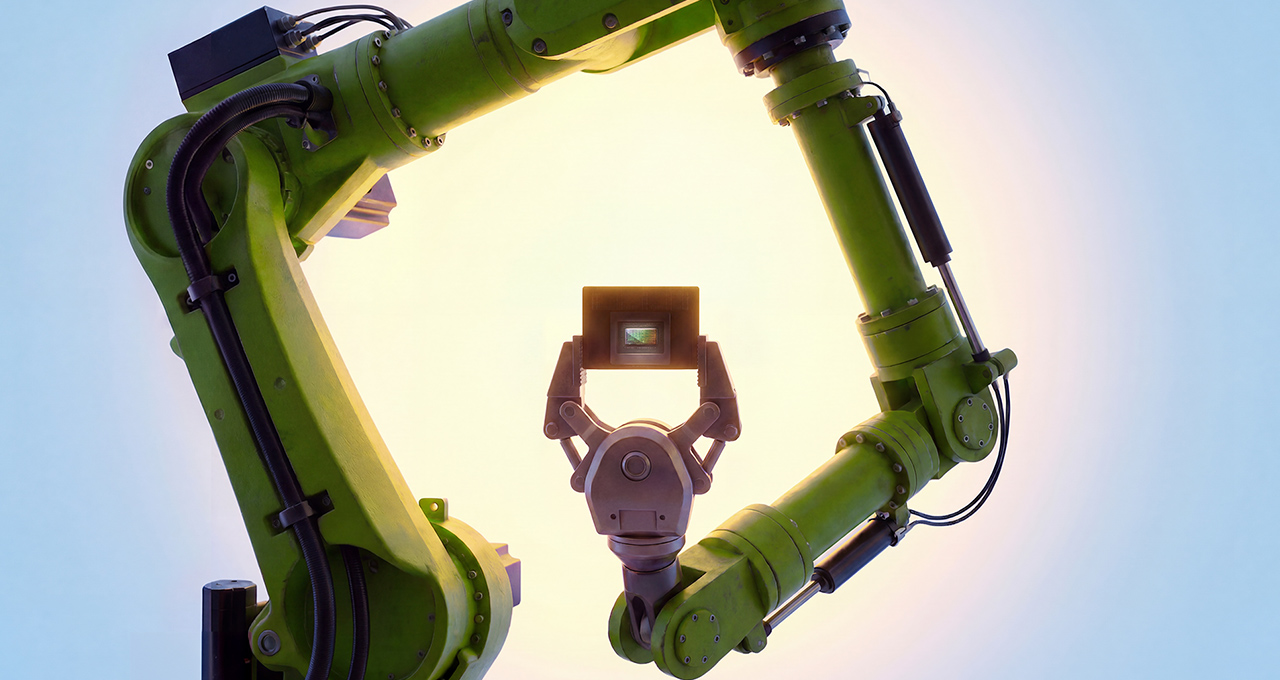
NVIDIA introduced the T3000 and T2000 Jetson modules based on the Thor architecture, advancing mainstream robotics and edge AI applications. These compact, power-efficient AI supercomputers enable mass-market deployment of general-purpose robots and autonomous machines. The new modules deliver high AI compute performance, integrated functional safety, and seamless running of the NVIDIA Halos for Robotics full-stack safety system.
AI giant Anthropic, backed by investment powerhouse Blackstone, is pivoting towards a new frontier: AI implementation. Their new venture, Ode, aims to embed 'forward-deployed engineers' directly within enterprises, addressing the critical last-mile challenge of AI adoption. This strategic move signals a belief that the next trillion-dollar opportunity lies not just in developing advanced AI models, but in their seamless integration and practical application within businesses.
Meta's MAGE framework analyzes component interaction in prompt optimization, revealing the Prompt Optimization Coupling Effect (POCE). This discovery has significant implications for AI development, highlighting the importance of evaluating systems based on both performance and stability. The findings suggest that coupled stochastic processes can improve performance but also amplify variance, impacting the overall effectiveness of AI models.
Apple has released a new study on ontology-amplified distillation for sovereign enterprise language models, achieving impressive results in grounding tasks. The study combines two related FAOS studies, showcasing a proof-of-mechanism and a negative-results method. The findings have significant implications for regulated financial institutions and the development of tenant-owned language models.
Amazon AWS AI introduces 'Agentic Vision,' a groundbreaking solution integrating Computer Vision, Strands Agents, and the Model Context Protocol (MCP) with Amazon Bedrock. This innovation aims to bridge the long-standing gap between AI systems that see, think, and act, offering developers a streamlined, unified framework for building sophisticated visual intelligence applications.
Unsloth Studio now supports Inkling, a 975B parameter open model with up to a 1M context window, licensed under Apache 2.0. The new release includes several updates and bug fixes, enhancing the overall user experience. With Inkling, Unsloth Studio can accept text, images, and audio and generate text, expanding its capabilities.
AI giants Anthropic and investment powerhouse Blackstone are shifting focus, betting that the true trillion-dollar opportunity in AI lies not just in creating advanced models, but in their seamless, expert implementation within enterprises. This strategic pivot is exemplified by the launch of Anthropic-backed Ode, a new venture designed to embed forward-deployed engineers directly into client organizations to accelerate AI adoption and value realization.
Amazon has significantly enhanced its QA Studio, built with Amazon Nova Act, by introducing robust capabilities for batch regression testing and seamless integration into CI/CD pipelines. This update enables parallel execution of test suites and brings AI-powered agentic QA automation into the heart of modern software delivery workflows, promising faster, more reliable deployments.

Elon Musk and OpenAI CEO Sam Altman are engaged in a public spat on social media after Apple filed a lawsuit against OpenAI. The lawsuit alleges that OpenAI misappropriated Apple's trade secrets. Musk and Altman have been exchanging barbs, with each accusing the other of scamming investors.

Google DeepMind's Demis Hassabis is calling for a US-led AI standards body to review frontier models for national security risks. The proposed body would be a federally overseen public-private organization, initially voluntary and eventually mandatory for US deployment. This move aims to address risks associated with artificial general intelligence, including cybersecurity and biological threats.

A heated public exchange unfolded on X between tech titans Elon Musk and Sam Altman, sparked by Apple's recent lawsuit against OpenAI. The high-profile spat underscores the escalating tensions surrounding AI policy, data privacy, and competitive practices among leading tech giants.
Anthropic, the world's most valuable AI company, has made a groundbreaking discovery in mechanistic interpretability, shedding light on the inner workings of its AI models. This breakthrough has significant implications for the AI industry, developers, and businesses. The company's research has the potential to revolutionize the way we understand and interact with AI systems.
Sam Altman's public dismissal of 'space data centers' as a viable public market investment, aimed at Elon Musk, has ignited a crucial debate about the future of AI compute infrastructure. This 'trash talk,' validated by many experts, underscores the immense challenges and economic realities facing ambitious off-world computing visions. The exchange highlights a divergence in strategic thinking between two AI titans regarding where the industry's significant capital should be directed.
Microsoft CEO Satya Nadella has issued a stark warning to companies leveraging AI, likening proprietary models from giant AI labs to 'Trojan horses.' This significant statement underscores growing concerns about vendor lock-in, data privacy, and the strategic implications of over-reliance on opaque AI systems.
Get the top AI stories in your inbox once a day, no spam.
Frequently Asked Questions
How often is AI Pulse updated?
New stories are added every couple of hours as they break, so the feed stays current throughout the day.
Where does ThinkSuite source its AI news from?
We pull from 100+ sources, including company blogs, research labs, and established tech publications, then fact check and summarize each story before it goes live.
Can I filter the news by company or topic?
Yes. Use the sidebar filters to narrow stories down by company (OpenAI, Anthropic, Google, and more), industry, or event type like funding and research.
Is AI Pulse free to use?
Yes. AI Pulse is free for anyone who wants to keep up with AI news, no sign up required. The daily newsletter is optional if you want updates in your inbox.