Researchers introduce PlanFlip, a framework to attack multi-agent LLM systems via planning-phase prompt injection, revealing vulnerabilities in popular models like GPT-5 and Llama-3.3-70B. The study highlights the importance of heterogeneous model diversity for security. PlanFlip's four attacks can corrupt downstream sub-tasks, evading keyword filters and compromising system integrity.

DeepSeek's new AI model uses a unified multimodal learner for clinical prediction, simplifying the process and achieving state-of-the-art results. This approach converts all patient data into a single natural language sequence and fine-tunes a pretrained language model. The model outperforms task-specific multimodal baselines and a clinically deployed gradient boosting system.
A groundbreaking arXiv paper systematically evaluates leading Large Language Models—including GPT-4 Turbo, Claude 3 Opus, and FinGPT—for their efficacy in technical market analysis and algorithmic trading. The research reveals promising results, with top models outperforming benchmarks, yet also highlights critical limitations like numerical hallucination and context window issues that demand further refinement for robust deployment.
OpenAI's latest study explores the necessity of executable world models, simplification, and verification in coding agents, revealing surprising results. The research evaluates four nested Codex-based agents, finding that every agent variant improves with stronger models and greater reasoning effort. The study's findings have significant implications for the development of Artificial General Intelligence (AGI).
This week, Helsing secured $1.8B Series E funding at an $18B valuation, while Uber acquired Delivery Hero in a €13B deal and Revolut announced plans to launch a US bank in 2027. These developments highlight significant investments and acquisitions in the European tech industry. The funding landscape is shifting, with notable trends in venture activity, investor moves, and emerging sectors.


OpenAI CEO Sam Altman has reportedly proposed donating 5% of the company's equity to a U.S. sovereign wealth fund. This groundbreaking move reignites crucial discussions around public participation in the immense financial gains generated by the AI boom and could set a new precedent for AI governance and wealth distribution.
A trio of researchers from Google DeepMind, who previously developed a poker-playing AI, have now founded EquiLibre Technologies, a Prague-based AI lab valued at over $500 million.
A California man has sued OpenAI and CEO Sam Altman, alleging that conversations with ChatGPT exacerbated his bipolar disorder, leading to delusions and a suicide attempt. The lawsuit highlights critical questions about AI safety, mental health safeguards, and the ethical responsibilities of generative AI developers. This case is part of a growing trend of legal challenges against OpenAI concerning its model's societal impact.
HuggingFace has introduced a new AI model, SeongryongJung/Qwen3-4B-Chemistry-SRPO-TR, designed for chemistry-related tasks. The model demonstrates impressive performance with a validation mean@16 score of 76.61%. This development is expected to enhance research and applications in the field of chemistry. The model is now available on the HuggingFace platform for developers and researchers to explore and utilize.
Researchers from Anthropic have introduced a new diagnostic to evaluate the physics literacy of large language models (LLMs) in parallel physical worlds. The study tested three LLMs, including Claude Opus 4.7, GPT-5.5, and Gemini 3.1 Pro, and found significant gaps in their ability to reason about unfamiliar physics frameworks. The results have important implications for the development and application of LLMs in scientific and technical domains.
Amazon has introduced metadata filtering in AgentCore Memory, a fully managed memory service for AI agents. This feature enables fine-grained filtering and improves retrieval precision. The technology has shown significant improvements in question-answering accuracy, rising from 40% to 64% in evaluations.

Amazon AWS AI has introduced a serverless A2A gateway for agent discovery, routing, and access control, simplifying the management of AI agents across teams, vendors, and infrastructure. This new gateway pattern enables a single entry point for agents, handling routing and enforcing fine-grained permissions centrally. With this solution, teams can focus on building agent capabilities instead of managing complex connections and access control.
Anthropic has unveiled Claude Science, a flagship AI product engineered to transform scientific research, particularly in computational biology and drug development. Positioned alongside Claude Code, this standalone offering empowers researchers to autonomously carry out complex tasks, marking a significant strategic leap for Anthropic into the life sciences domain and intensifying competition in AI for scientific discovery.
Microsoft Research introduces Memora, a harmonic memory representation that balances abstraction and specificity, enabling AI agents to recall past interactions and scale capabilities. This innovation outperforms existing models, using up to 98% fewer context tokens. Memora sets new state-of-the-art on LoCoMo and LongMemEval benchmarks.
Grok 4.5, a base model with 1.5 trillion parameters, has been further trained on Cursor data and is currently in beta testing at SpaceX and Tesla. This development marks a significant milestone in AI research and its applications in the tech industry. The model's capabilities and potential uses are being explored by these industry leaders.

Etched, a rising competitor to Nvidia, has reached a remarkable valuation of $5 billion and achieved $1 billion in sales for its AI chip, signaling a significant shift in the AI chip market.
Amazon introduces Bedrock AgentCore Observability to debug production AI agents, providing visibility into agent execution and decision-making. This feature addresses the challenges of silent failures in AI agents, enabling developers to identify and resolve issues efficiently. With this release, Amazon aims to improve the reliability and performance of AI systems.

OpenAI's outage led to account deactivations, causing users to lose their work and face delays in their projects.
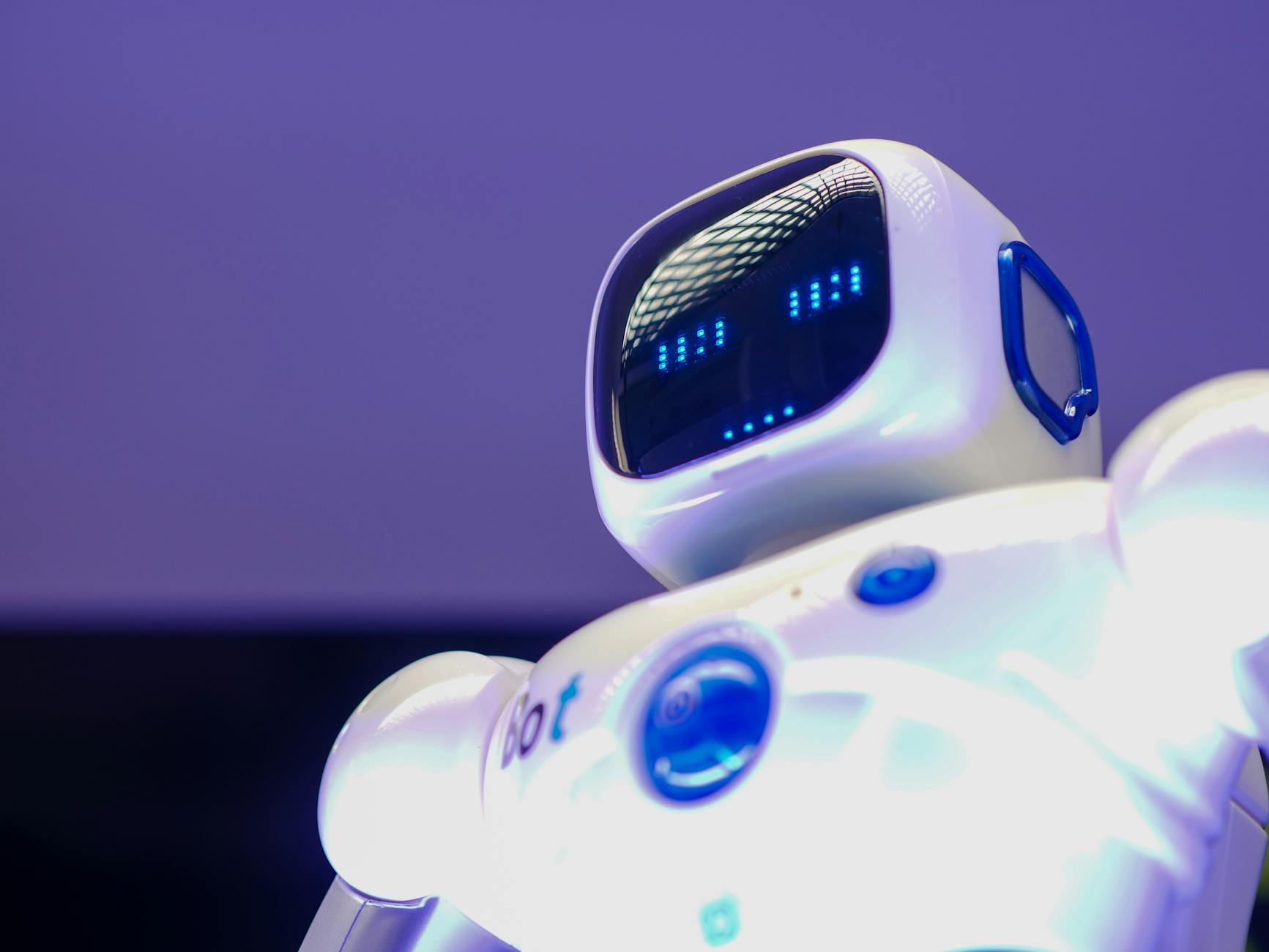
Anthropic's new AI Workbench has demonstrated its capability to map complex scientific fields for an astonishingly low cost of $26, signaling a paradigm shift in research. This groundbreaking efficiency promises to democratize scientific discovery, making advanced research accessible and affordable to a wider array of institutions and individuals. The development underscores the transformative potential of AI to accelerate innovation across every scientific discipline.
Amazon has launched a new $1 billion Frontier Deployment Engineering (FDE) organization, mirroring strategic moves by OpenAI and Anthropic. This initiative aims to embed expert engineers within client companies to accelerate the deployment of purpose-built AI agents, emphasizing rapid integration and fostering customer self-sufficiency in cutting-edge AI adoption.

Elon Musk has announced a significant strategic shift, reassigning dozens of top Starship and Starlink engineers from SpaceX to bolster xAI's Grok development. This aggressive move, coupled with the integration of recently acquired Cursor's AI coding expertise, signals a renewed push for xAI to rapidly advance its foundation models and compete fiercely in the escalating AI race.
Amazon Web Services (AWS) has unveiled a groundbreaking solution leveraging Amazon Bedrock and AWS HealthLake to build an agentic AI healthcare claims pipeline. This innovation directly addresses the industry's costly manual claims processing, promising significant reductions in human oversight and improved accuracy through intelligent automation.
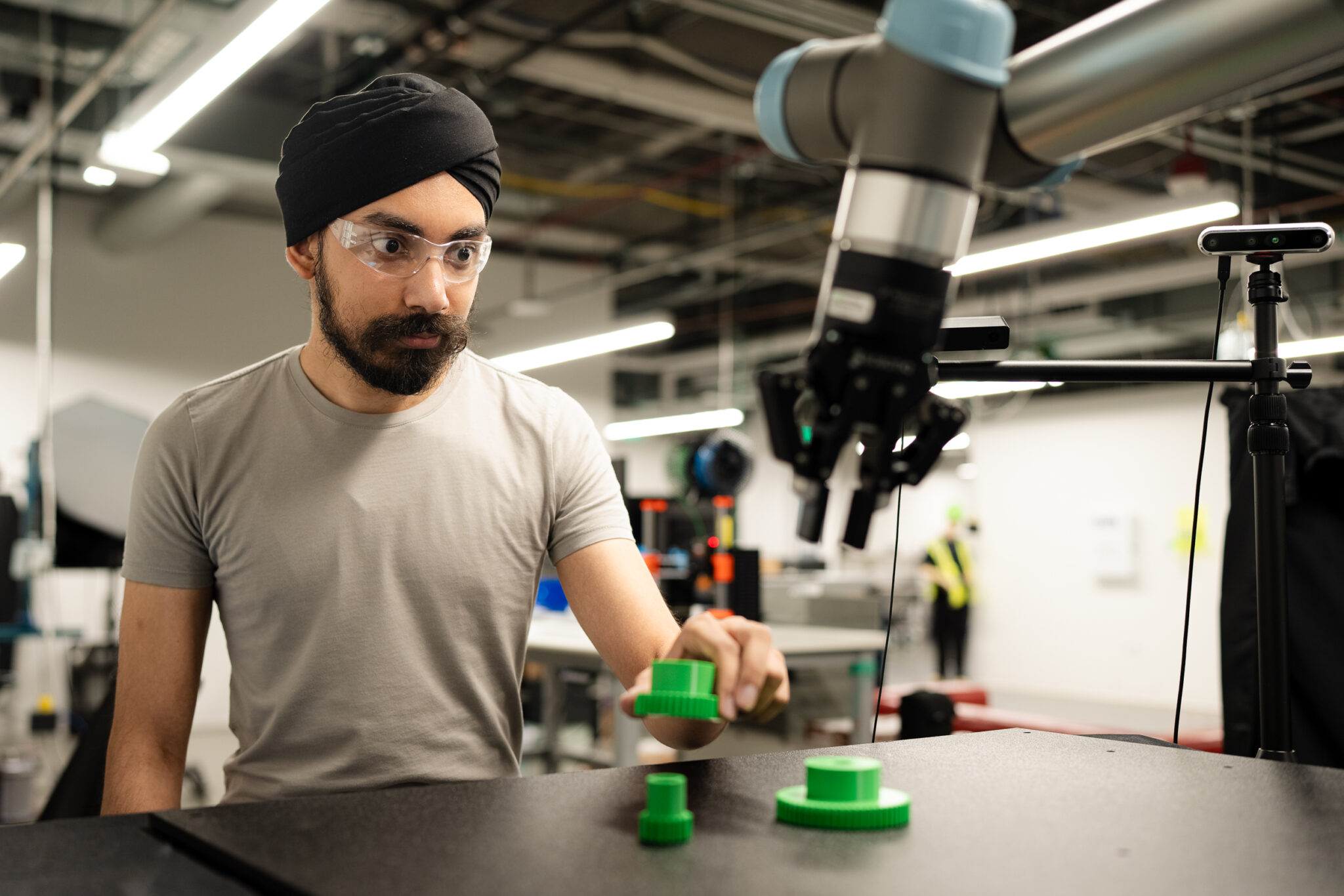
NVIDIA's Jaiveer Singh leads the charge in accelerating the future of robotics with Isaac ROS, a CUDA-accelerated software platform built on ROS 2. This initiative empowers developers to build and deploy autonomous robots faster, bridging the gap between imaginative concepts and real-world utility. Isaac ROS is poised to become the foundational 'connective tissue' for the physical AI era.
Amazon AWS AI introduces managed entitlements for Amazon Bedrock models, simplifying access across multiple accounts. This feature removes the need for AWS Marketplace permissions in workload accounts, streamlining AI adoption. Organizations can now subscribe once from a central account and distribute model access across their organization.
Anthropic has released version 0.115.0 of its SDK for Python, introducing new features such as support for Managed Agents event delta streaming and agent overrides. This update aims to enhance the functionality and usability of the Anthropics SDK, providing developers with more tools to work with AI models. The release is part of Anthropic's ongoing efforts to improve its offerings and stay competitive in the AI market.
Get the top AI stories in your inbox once a day, no spam.
Frequently Asked Questions
How often is AI Pulse updated?
New stories are added every couple of hours as they break, so the feed stays current throughout the day.
Where does ThinkSuite source its AI news from?
We pull from 100+ sources, including company blogs, research labs, and established tech publications, then fact check and summarize each story before it goes live.
Can I filter the news by company or topic?
Yes. Use the sidebar filters to narrow stories down by company (OpenAI, Anthropic, Google, and more), industry, or event type like funding and research.
Is AI Pulse free to use?
Yes. AI Pulse is free for anyone who wants to keep up with AI news, no sign up required. The daily newsletter is optional if you want updates in your inbox.